

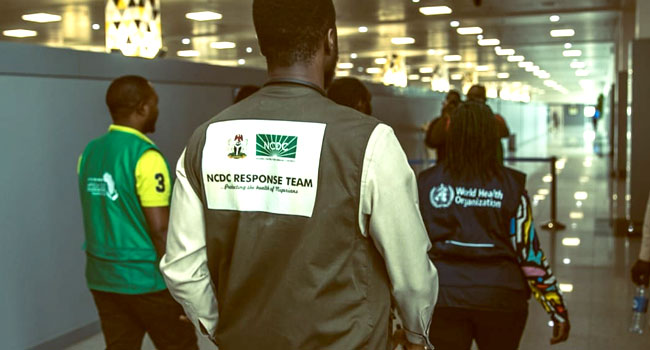
The Nigeria Centre for Disease Control and Prevention (NCDC) has announced that all 62 individuals traced in connection with the country’s recent imported case of Bundibugyo virus disease have completed their mandatory 21-day surveillance without contracting the illness.
Speaking at a press briefing in Abuja on Friday, the Director-General of the NCDC, Jide Idris, revealed that the final contact finished the observation period and was discharged on November 13. While 13 of the 62 monitored individuals experienced fever or other non-specific symptoms during that time, laboratory tests confirmed that every single one of them was negative for the virus.
“Today, we announce an important milestone in our national response to the imported case of Bundibugyo virus disease,” he said.
“The 21-day monitoring period for all 62 identified contacts has been completed with the last contact discharged today.
“We are glad to announce that none of the contacts became ill, meaning no transmission from the index case.”
According to Idris, this successful containment highlights how vital early detection, swift investigation, and public cooperation are in stopping infectious disease outbreaks. However, he emphasized that wrapping up contact tracing does not mean the threat is officially over.
“Given the ongoing transmission of Ebola in the DRC, Nigeria remains vigilant and at high alert. Our National Emergency Operations Centre remains activated at level 3 to protect the health of all Nigerians,” he said.
The NCDC boss praised healthcare workers and public health teams in the Federal Capital Territory (FCT) whose alertness triggered the initial response, while also thanking the 62 contacts and their families for following health guidelines.
With travel and social gatherings expected to rise across the country ahead of the December festivities, Idris urged Nigerians not to let their guard down. He advised travelers and the general public to stay calm, seek prompt medical care if they feel sick, and ensure they share their recent travel history with doctors. He also cautioned people to avoid unprotected contact with the blood or bodily fluids of anyone showing symptoms, and to rely strictly on verified updates from the agency’s official channels.
Background on the Imported Case
The Federal Government initially confirmed the Ebola case in the FCT on October 20. The index patient, a 42-year-old woman, had traveled from Uganda and arrived in Abuja via Addis Ababa, Ethiopia, on October 3. She began showing symptoms on October 7 and checked into a private medical facility on October 11.
After being alerted on October 19, the NCDC collected samples and confirmed the infection at its national reference laboratory the next day. On October 26, the patient was medically evacuated to Switzerland for further treatment alongside her husband, who was listed as a close contact. She has since made a full recovery and was discharged from the hospital on November 11.
Immediately after confirming the case, the NCDC triggered its emergency response protocols, launching surveillance, laboratory testing, and contact tracing that eventually identified and monitored the 62 exposed individuals, including healthcare workers.
