

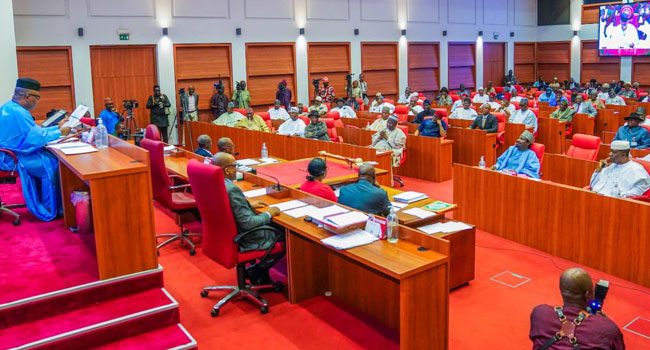
The Senate has pledged to accelerate the constitutional amendments required to establish state police forces, reacting to a worrying surge in kidnappings, banditry, and general lawlessness across Nigeria.
In a conversation with Saturday PUNCH, the Chairman of the Senate Committee on Media and Public Affairs, Yemi Adaramodu, confirmed that the upper legislative chamber is fully dedicated to speeding up the legislative work needed to overhaul the country’s security framework.
He emphasized that the Senate wants to move quickly on these constitutional revisions to tackle the nationwide security crisis head-on.
“Very soon.
As I earlier told you, the Senate is fully prepared to commence the constitutional processes for the establishment of state police without delay.
“We will ensure that the necessary legislative stamina is accorded to the establishment of state police, so as to keep Nigerians safe and secure, and drive out rampaging bandits and other social marauders,” Adaramodu said.
This legislative commitment follows a wave of public anxiety over violent crimes, leading to intense calls to decentralize Nigeria’s police force. Just days ago, the Senate revealed that the official groundwork for this constitutional shift had already begun, positioning it as a direct legislative countermeasure to banditry and abductions.
Adaramodu re-emphasized that the Senate is eager to fast-track the state policing bill to assist President Bola Ahmed Tinubu’s administration in stabilizing the country.
“The Senate is fully prepared to commence the constitutional processes for the establishment of state police without delay.
The legislature is desirous of supporting President Bola Ahmed Tinubu and the Nigerian public on this,” he said.
The momentum for decentralized law enforcement reached a boiling point following the May 15 abduction of teachers and school children in Oyo State.
READ MORE: DSS, Forest Guards foil ISWAP supply run in Borno
Gunmen stormed three separate schools within the Ahoro-Esinle and Yawota communities in the Oriire Local Government Area, kidnapping dozens and sparking nationwide fury regarding the vulnerability of academic institutions under the current centralized security model.
Supporters of the state police model have consistently argued that localized forces are better equipped for intelligence gathering, understand the nuances of their communities, and can react far quicker to local threats than a federally controlled force.
However, making state policing a reality requires a rigorous legal process.
The proposal must successfully pass through the National Assembly and secure approval from at least two-thirds of Nigeria’s state Houses of Assembly to officially amend the constitution.
With the Senate now putting its weight behind the movement, the national conversation around state policing is set to intensify as lawmakers hunt for permanent solutions to the country’s safety issues.
