





The ongoing Ebola crisis in the Democratic Republic of Congo (DRC) risks surpassing the most devastating outbreak on record, which previously claimed over 11,000 lives, according to the head of the Africa Centres for Disease Control and Prevention (Africa CDC).
Official government data released on Tuesday indicates that confirmed cases in the DRC have climbed to 837, with the death toll now standing at 196.
“If we don’t stop the outbreak very soon, it will be worse than what we had in West Africa and eastern DRC,” Africa CDC Director-General Jean Kaseya warned during a virtual gathering of African leaders and global donors held in Burundi on Tuesday.
Speaking further on the situation, Kaseya highlighted that tens of thousands of individuals who might have been exposed to the virus have yet to be located.
“The contact tracing is a major indicator and a major issue. We are missing more than 26,000 people, and we don’t know where they are, and we don’t know if they are contaminating other people.”
Aid agencies fear that the situation will worsen before it improves.
“We are afraid that this could last one year to end this disease,” said Bruno Michon, operations manager for the International Federation of Red Cross and Red Crescent Societies, noting that the epidemic has not yet reached its peak.
Obstacles to Containment and Funding Shortfalls
Containment efforts are currently facing severe bottlenecks, including a shortage of dedicated treatment centers and pushback from local communities regarding strict hygiene protocols.
Medical authorities noted that even after more than a month since the initial declaration of the outbreak, the full scope of the infection remains unclear.
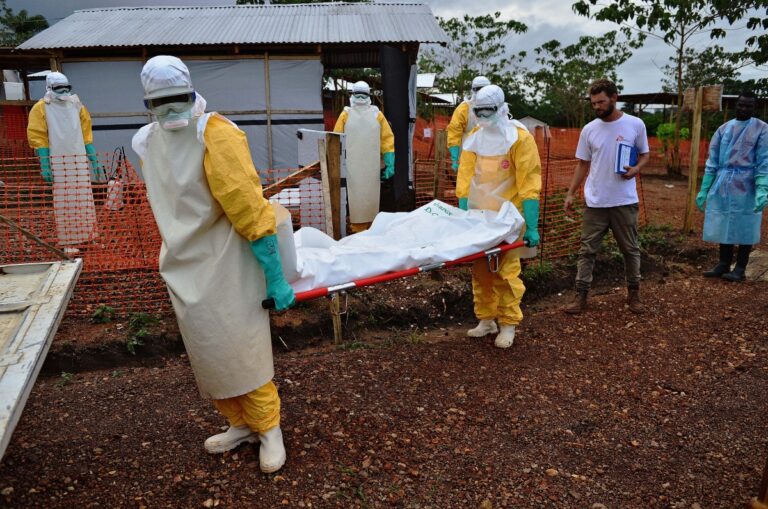
Transmission continues to be driven by traditional burial practices.
The bodies of deceased Ebola victims remain highly contagious, and when relatives handle them without specialized protective gear, the virus spreads rapidly.
Financing the emergency response has also proven difficult.
African nations have secured less than 20 percent of the $518 million required to reinforce containment strategies, according to Burundi’s President Evariste Ndayishimiye, who serves as the chairman of the African Union. This severe funding gap has triggered intense concern among officials who worry about the catastrophic fallout if the virus isn’t contained swiftly.
Compounding the crisis is the fact that there is currently no approved vaccine or treatment available for this particular strain of Ebola. The World Health Organization (WHO) estimates that a viable vaccine could take up to nine months to develop.
Meanwhile, the virus is beginning to cross borders. Neighboring Uganda has registered 19 cases, 14 of which involved individuals arriving from the DRC, alongside two reported fatalities.


