

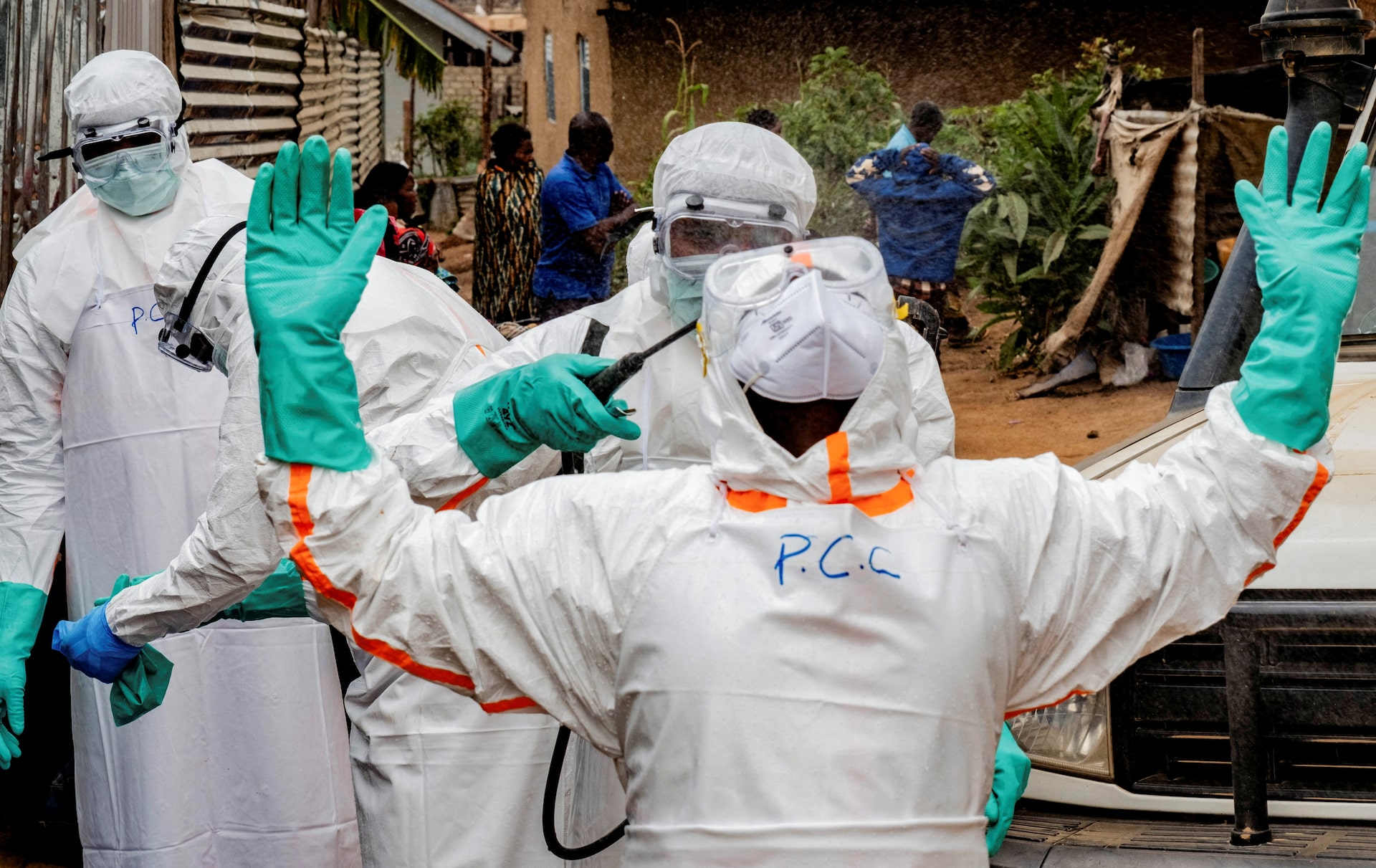
The deadliest Ebola outbreak on track in DRC history has expanded into a sixth province, health officials reported on Thursday. The Africa Centres for Disease Control and Prevention confirmed the first casualty in the previously unaffected Bas-Uele region: a motorcycle-taxi driver who traveled from a neighboring area, visited multiple hospitals seeking care, and tested positive for the virus after his death in Buta.
Following his death, colleagues attempted to forcibly seize his body, forcing police to step in and raising serious concerns about further virus transmission among the local population.
This current epidemic in eastern Congo has already claimed 2,100 lives, accumulating fatalities nearly three times faster than the catastrophic 2014 to 2016 West African outbreak. Although the West Africa epidemic remains the worst on record with more than 11,000 fatalities, the World Health Organization warned this week that the current crisis is on course to surpass it.
Response efforts face immense hurdles in the field. Striking unpaid healthcare workers, threats from armed rebel groups, deep-seated mistrust within traumatized communities, and widespread denial about the virus’s existence continue to hamper containment measures.
Bas-Uele’s geography adds further complexity. Bordering the Central African Republic, the vast northeastern region frequently hosts thousands of displaced refugees fleeing recurring regional violence. Poor road infrastructure, minimal communication networks, and constant population movement driven by gold mining and conflict make tracking and treating the virus extraordinarily difficult.
As of Thursday, six of Congo’s 26 provinces have reported infections. According to the WHO, approximately 90 percent of all cases and 80 percent of deaths remain concentrated in Ituri province.
Health officials caution that the full scale of the epidemic is still uncertain. Although declared on May 15, genomic sequencing later revealed the outbreak actually began months earlier, in February. Compounding the crisis, there are no approved vaccines or treatments specifically targeting the rare Bundibugyo strain driving this outbreak, though clinical trials for two prospective therapeutics launched last month in Ituri.