

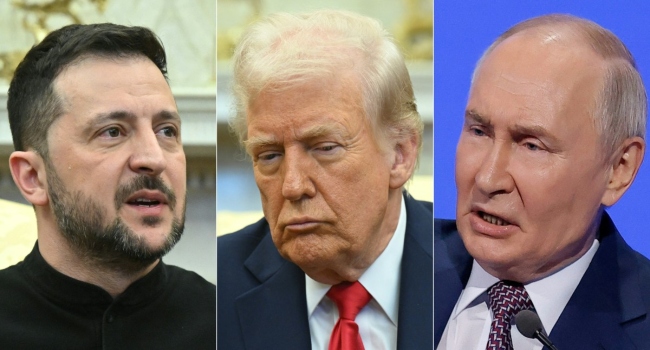
Following a productive meeting with G7 leaders at a summit in Evian-les-Bains, France, US President Donald Trump has called on Russia to reach a peace agreement with Ukraine, pledging his support to end the conflict.
Speaking to reporters on Tuesday near the Swiss border, Trump emphasized the human cost of the ongoing war, stating, “I’m gonna do whatever I can.” He noted that too many young men were dying on both sides of the battlefield.
“Look, Russia should make a deal,” Trump stated. “I settled eight wars. This was the one I thought was going to be the easiest to settle.” Observers have noted that Trump’s assertion of ending eight wars is widely disputed.
The discussions on Tuesday morning involved Ukrainian President Volodymyr Zelenskyy and the G7 nations, which comprise the United States, France, the United Kingdom, Canada, Germany, Italy, Japan, and the European Union. On the sidelines of the summit, Zelenskyy also held talks with Trump and US Secretary of State Marco Rubio.
Taking to X (formerly Twitter) after the session, Zelenskyy highlighted the core objectives of the meeting, writing, “The key focus is to strengthen air defence for Ukraine and advance diplomacy, to make Russia end its war.
Peace is needed.”
Zelenskyy further revealed that he secured critical commitments from the G7 nations.
“More air defence missiles along with licenses to produce them, winter support package, and cranking up pressure on Russia. Importantly, the US is ready to provide backstop across these lines of effort,” he shared, adding, “It is key that everything discussed be implemented. Russia must come to learn that its war will never be normalised. I thank everyone who’s helping.”
European diplomats characterized the environment of the talks as constructive.
European Commission President Ursula von der Leyen also shared her perspective on X, noting that the dynamics of the conflict have shifted. “The tide is turning for Ukraine.
The situation in 2026 is very different from 2025. Ukraine is bravely holding the frontline,” she posted. “Russia’s fatigue is openly showing. That’s the time to double down on our support.”
Middle East Security and the US-Iran Deal
In addition to the Ukrainian conflict, G7 leaders dedicated a working lunch to discussing the peace deal between the United States and Iran. The conversation focused on establishing alternative energy routes that bypass the Strait of Hormuz and securing a rapid reopening of the critical waterway.
Summit host and French President Emmanuel Macron stressed the importance of finalizing a “solid, serious agreement that is finalised.”
Macron affirmed that France and its Western allies are “ready to take action very quickly” to ensure the strait is reopened peacefully.
Both France and the UK have been major proponents of a mission dedicated to restoring maritime security in the area as soon as conditions permit.
Trump informed reporters that the Strait of Hormuz would be “completely open” by Friday, coinciding with the scheduled signing of a formal accord in Geneva.
The initial agreement, which was digitally signed on Monday, sets up a 60-day window for more detailed and complex negotiations.
These upcoming talks will cover the lifting of sanctions and the status of Iran’s highly enriched uranium. Looking ahead to the next phase of diplomacy, Trump remarked that he expects the second stage of negotiations with Iran to “be actually easier.”