



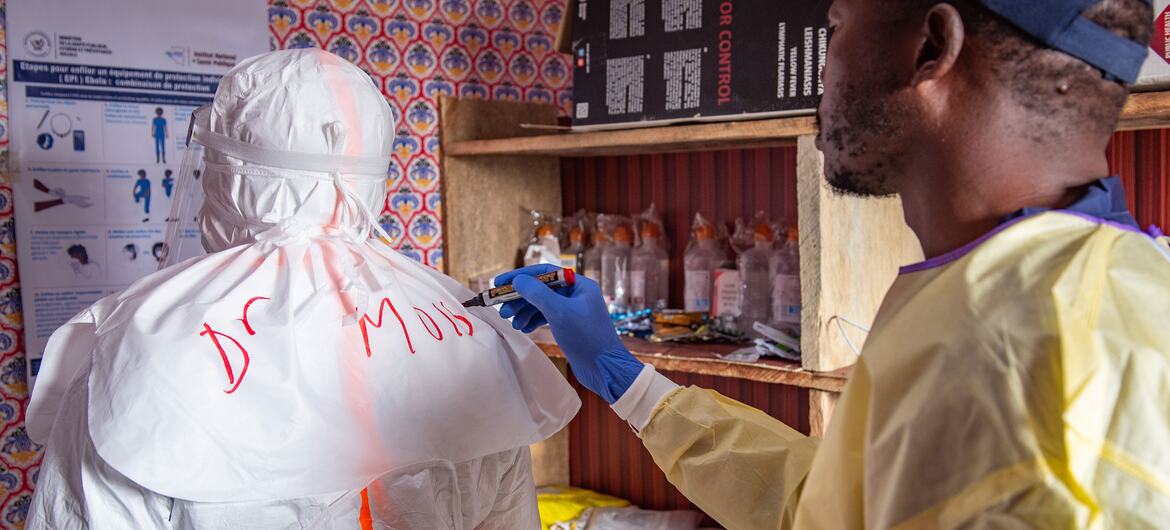
A initial shipment of over 16,000 Ervebo vaccine doses reached the Democratic Republic of Congo late Friday night, observed by an AFP reporter, as the nation confronts its most fatal Ebola surge to date.
The country’s 17th recorded Ebola outbreak was officially confirmed on May 15, though transmissions likely began weeks prior. Thousands have died across northern and eastern regions where state institutions are limited, medical infrastructure is scarce, and multiple insurgent factions have been active for decades.
On Thursday, the World Health Organization confirmed that a overall allocation of 70,000 Ervebo doses, manufactured in Germany, is designated for the DRC.
The vaccine—developed by Merck—has official regulatory approval specifically targeting the Zaire strain, rather than the Bundibugyo strain involved in the current emergency. While health experts have not yet established whether Ervebo provides human immunity against the Bundibugyo strain, preliminary findings from animal studies indicate possible cross-protection.
The Ervebo vaccine “has already been used several times, and in particular on a very large scale during the 2018–2020 outbreak”, stated DRC Health Minister Samuel Roger Kamba during a press briefing on the Kinshasa airport tarmac where 16,250 doses were offloaded Friday.
According to WHO guidelines, 20,000 of the total 70,000 provided doses will be deployed for clinical evaluation, while 50,000 are designated for “frontline and health workers”.
Official Congolese health statistics show the present outbreak has led to 2,516 fatalities out of 5,290 verified cases.
Julien Harneis, the UN senior Ebola coordinator, expressed concern on Friday, noting the epidemic “is growing exponentially”.
Earlier this month, WHO immunization advisory groups endorsed a full-scale human trial using Ervebo to evaluate its effectiveness against the Bundibugyo strain.
Concurrently, two candidate vaccines tailored for the Bundibugyo strain are undergoing clinical trials: an mRNA candidate developed by US firm Moderna, and another by Oxford University in the United Kingdom. An additional candidate, “rVSV Bundibugyo,” identified by the WHO as “the most promising,” is slated for development by Singapore-based Hilleman Laboratories.
Ebola spreads via direct exposure to bodily fluids and produces severe fever. Over the past five decades, the virus has claimed more than 15,000 lives across the African continent.
For official updates and global public health resources, you can consult the World Health Organization.


