



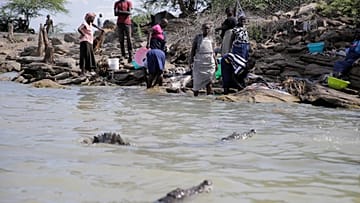
Kenya wildlife officials are setting traps along the edges of Lake Baringo to relocate large crocodiles as rising water levels drive the animals into human settlements. Climate-driven severe rainfall has pushed Rift Valley lakes to heights unseen in over 50 years, forcing tens of thousands of residents to relocate and bringing wild animals into dangerous contact with local communities.
With incoming El Nino weather patterns expected to aggravate flooding, the Kenyan government launched a seven-day campaign to move heavy crocodiles away from human habitats. Catching the reptiles is difficult; wildlife rangers broadcast recordings of distressed dogs alongside fish-baited nets to lure them in while instructing local spectators to stay silent.
Dominic Mijele, the Kenya Wildlife Service (KWS) veterinary officer directing the initiative, noted that catching them is not easy, they are very shy, it is difficult to lure them, and dangerous.
Although several crocodiles avoided capture after growing suspicious from earlier trappings, KWS confirmed 13 animals were successfully captured and transported to a safe sanctuary, with a total goal of removing at least 30. During one capture, officers used a vehicle to drag a trapped reptile from the water, engaging in a 30-minute struggle to restrain the thrashing animal.
A local fishmonger watching the operation remarked that it is the one that has been disturbing me at my home every day.
Lake Baringo houses over 200 crocodiles, with the relocation effort strictly targeting specimens weighing 200 kilograms or more. Satellite data indicates the lake has expanded 70 percent since 2010, now occupying 234 square kilometers.
Mijele expressed concern that when the El Nino rains come, the water will continue rising and flush the crocodiles into the village.
While many local fishmongers cheered the removal of the dangerous animals, others worry about the financial impact.
Dorcas Kiplagat, a 35-year-old fishmonger, described the removal as a great relief, noting the crocodiles have terrorised us for a long time and destroy our fishing nets every day. Conversely, a local resident voiced concern about losing a major attraction, stating it is enough now and asking what they are going to show foreign tourists.


