



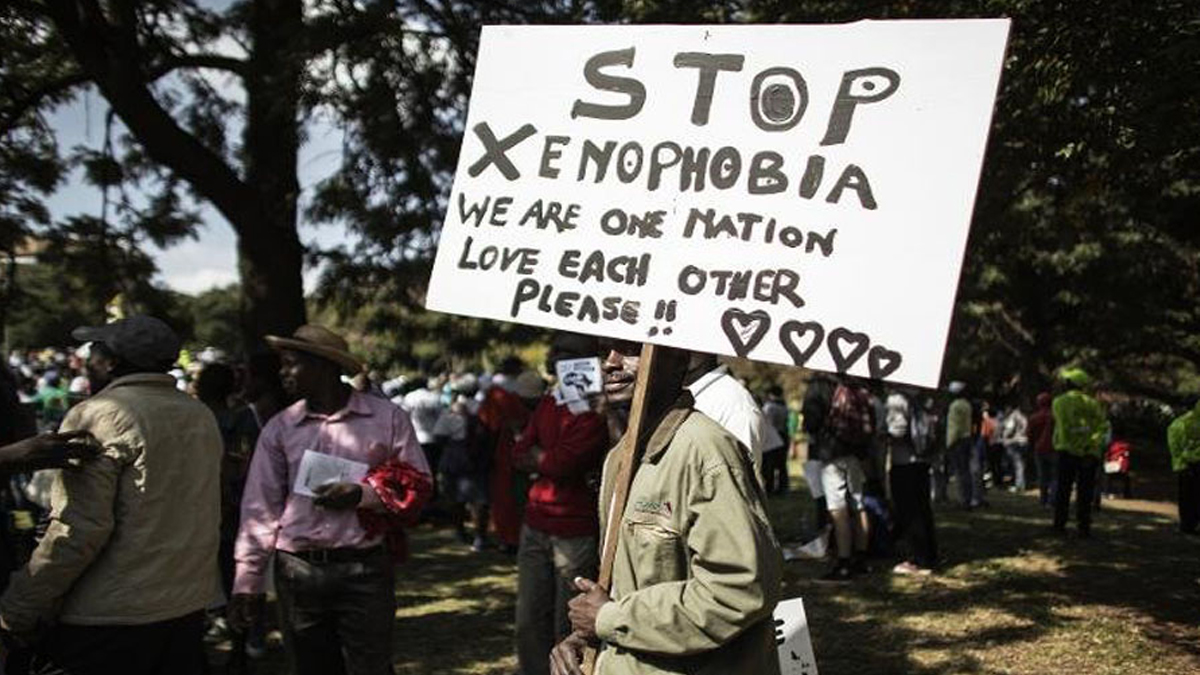
A severe wave of anti-foreigner violence has once again convulsed South Africa, forcing thousands of continental migrants into hiding and igniting a high-stakes diplomatic and humanitarian emergency between Africa’s two largest superpowers.
Armed vigilante groups have marched through urban sectors, carrying out door-to-door documentation checks, looting migrant-owned shops, and issuing hard deadlines for foreign nationals to leave. The violence has turned fatal, with the documented deaths of at least two Nigerian citizens, Amaramiro Emmanuel and Ekpenyong Andrew, in separate targeted incidents.
In immediate response, the Nigerian government has executed a tense, large-scale evacuation. Over the weekend, the first batch of 258 traumatized Nigerian returnees arrived safely at the Murtala Muhammed International Airport in Lagos aboard a fully government-funded Air Peace flight.
Receiving the citizens on behalf of the state, Ambassador Sola Enikanolaiye, Minister of State for Foreign Affairs, confirmed that the administration has extended its emergency voluntary repatriation window to accommodate over 1,000 additional citizens seeking a way out of South Africa.
Anatomy of Hate: Xenophobia vs. Afrophobia
While mainstream commentary often utilizes the blanket term Xenophobia, defined broadly as the fear or hatred of that which is foreign, analysts argue the crisis on the ground requires a much more specific label:
Afrophobia
Data reveals a stark operational double standard. Western, European, or Asian expatriates in South Africa routinely navigate welcoming visa structures and affluent enclaves. Meanwhile, black African neighbors bear the exclusive brunt of localized fury, structural exclusion, and street-level violence. Abike Dabiri-Erewa, Chairman of the Nigerians in Diaspora Commission (NiDCOM), forcefully rejected claims that the targeted individuals were criminals, stating bluntly that their only crime “was the color of their skin; they are black migrants”. Critics call it a tragic breakdown of pan-Africanism, noting the profound historical irony of South Africans violently turning on nations that directly financed, sheltered, and aided them during their liberation struggles.
The Weight of History and the Psychology of Trauma
The root causes of this recurrent crisis were heavily debated in a panel discussion featured in the video.
Speakers on the panel urged observers to look at the underlying context of South Africa’s unresolved past.
Emerging from decades of systemic human rights abuses, South Africa remains a nation heavily scarred by the institutional wounds of Apartheid.
The panel argued that in terms of historical timelines, 30-plus years of democracy is still an incredibly young, new framework.
Expecting a society to magically heal from such multi-generational trauma in three decades is highly unrealistic, drawing a parallel to how the global community would never tell Jewish survivors to simply “get over” the Holocaust by now.
However, this unhealed internal friction has created a complex and defensive national identity. The panel in noted a strange paradox: while domestic racial and class divides are incredibly painful at home, they instantly dissolve when South Africans travel overseas.
Hearing Afrikaans or seeing a compatriot abroad triggers immediate solidarity “Hey, these are my people!”. Back on the ground, however, that fierce protectiveness often morphs into a toxic tribalism at a continental scale, where the state’s failure to address poverty, inflation, and unemployment is aggressively scapegoated onto fellow Africans.
Tears in the Domestic Sphere
The Impact on Families
The human toll is fracturing the sanctuary of the home. Intercultural marriages, specifically South African women married to Nigerian men, have been placed directly in the crosshairs of xenophobic rhetoric.
Vigilante groups and online media campaigns have actively harassed these families, labeling local women who marry foreign nationals as “traitors” to the state and demanding they leave the country.
The resulting domestic environment is defined by severe social isolation, high alert, and a fear of neighborhood retaliation.
This environment is deeply toxic for children, who learn prejudice dynamically.
By witnessing adults act as extra-judicial border enforcers without legal consequences, local children internalize violence as a civic duty. Conversely, migrant children are suffering deep psychological trauma.
Many are experiencing severe anxiety and exclusion, as vigilante blockades at public facilities have barred foreign-born families from accessing essential schools and local health clinics.
Economic Retaliation and the Bilateral Paradox
In Abuja, the Nigerian National Assembly is facing immense pressure to act, with lawmakers declaring that “enough is enough”.
Prominent legislative voices, including Senator Adams Oshiomhole, have pushed for aggressive economic diplomacy. Proposals are actively being debated to revoke or heavily restrict the operating licenses of massive South African corporate giants that dominate the lucrative Nigerian market, such as MTN and DStv.
The Minister of Foreign Affairs, Ambassador Bianca Odumegwu-Ojukwu, has officially summoned South Africa’s diplomatic envoy, fiercely rejecting South African attempts to label legitimate business owners as “illegal immigrants”. Tension mounted further after Chrispin Phiri, spokesperson for South Africa’s Department of International Relations and Cooperation (DIRCO), provocatively stated that South Africa plans to begin billing foreign governments for the cost of deporting their citizens.
Yet, a fascinating macroeconomic paradox underpins this entire political standoff.
Despite the severe dip in diplomatic goodwill, trade data from the National Bureau of Statistics reveals that Nigeria’s imports from South Africa actually, surged by 23.83% in the first quarter, climbing to ₦155.26 billion.
Because their economies are so deeply intertwined, policy groups like the Centre for the Promotion of Private Enterprise have urged caution. They warn that while the anger in Abuja is completely justified, rash retaliatory measures like nationalizing assets could trigger a domestic economic self-sabotage, tanking broader investor confidence.
Breaking the Cycle
As the Air Peace evacuation flights continue to land in Lagos, experts emphasize that true resolution requires looking beyond short-term repatriation.
Breaking this cycle of hate requires a massive structural overhaul within South Africa: implementing pan-African history curriculums to remind youth of shared liberation histories, ensuring the absolute judicial prosecution of vigilante leaders, and compelling the state government to address the underlying economic corruption and decay that breeds public desperation in the first place.


