


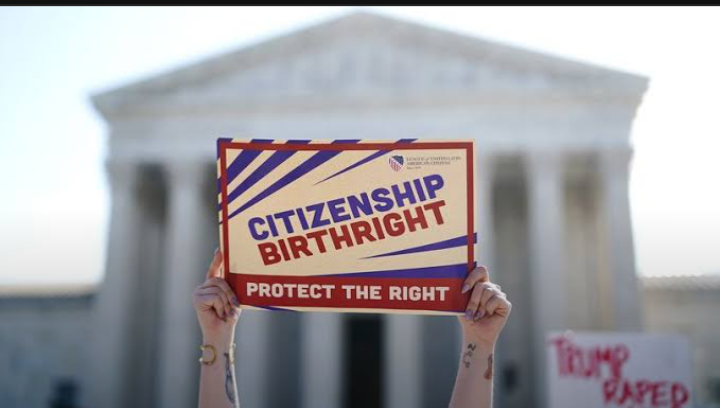
The United States Supreme Court has overturned an executive order by President Donald Trump that aimed to restrict birthright citizenship. With this decision, the court reconfirmed that children born on American soil are constitutionally entitled to US citizenship.
In a 6-3 majority ruling delivered on Tuesday, the court determined that the 14th Amendment guarantees citizenship at birth to children born within the United States, even if their parents are temporary visa holders or are in the country unlawfully.
Writing the majority opinion, Chief Justice John Roberts stated that the language of the Constitution is clear and ensures citizenship to all individuals born in the United States and subject to its jurisdiction.
This decision maintains a constitutional tradition spanning over 150 years. It aligns with the historic 1898 Supreme Court ruling in United States v. Wong Kim Ark, which previously upheld birthright citizenship for children born in the US to immigrant parents.
President Trump issued the executive order shortly after taking office for his current term, contending that automatic citizenship acted as an incentive for illegal immigration.
The administration argued that undocumented immigrants do not fall fully under US jurisdiction as outlined by the Constitution.
The Supreme Court dismissed this reasoning, concluding that an executive action cannot nullify the explicit protections established by the 14th Amendment.
The ruling marks a major legal defeat for the Trump administration, halting its attempt to limit birthright citizenship outside of a formal constitutional amendment.
Dissenting from the majority were three conservative justices, Clarence Thomas, Neil Gorsuch, and Samuel Alito.
They argued that the 14th Amendment was not intended to automatically grant citizenship to nearly every person born on US soil, irrespective of the legal status of their parents.
According to legal experts, the landmark ruling solidifies one of the nation’s foundational constitutional protections, making it highly improbable for future administrations to modify birthright citizenship without pursuing a full amendment to the US Constitution.