

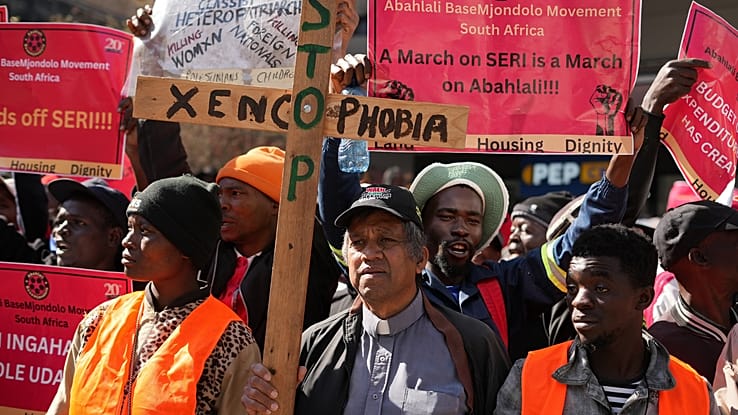
A South African court has granted permission for the March and March movement to hold its planned demonstrations, though under significantly stricter guidelines following updates to a government application.
Judge Peter Olsen ruled that the group is permitted to march strictly between 9am and 3pm. Under the revised conditions, demonstrators are prohibited from carrying weapons, covering their faces, damaging property, or setting fire to buildings. The legal matter is scheduled to return to court next year.
The court action was initiated by acting Police Minister Firoz Cachalia, who sought an outright ban on the rallies due to concerns over public order and the safety of foreign nationals. Cachalia pointed to police intelligence regarding an alleged plot to burn down the Home Affairs Refugee Reception Centre in Berea, a Durban suburb where asylum seekers process their paperwork.
Police noted that the current tension has been heightened by misinformation surrounding a July Constitutional Court judgment, which established that asylum seekers cannot be denied entry into the national asylum system based solely on procedural grounds.
During Friday’s proceedings, legal counsel representing the police argued that Durban had devolved into a state of lawlessness that reactive policing methods could no longer handle. They stated that even with more than 400 officers deployed, the response remained structurally unable to stem the widespread violence.
In response, the March and March movement defended its constitutional right to assembly, distancing itself from the unrest and rejecting accountability for the actions of violent individuals.
The agenda is to try and silence the people, March and March legal representative Xolani Zuma told reporters prior to the verdict. The real problem are illegal immigrants who are here in the country and terrorising people, he added.
This legal dispute unfolds just days before the local elections on November 4, a period during which legal representatives warned that law enforcement resources are already severely strained. Populist groups heading the marches accuse foreign nationals of taking employment opportunities and public services from South Africans, making the issue a major point of debate ahead of the vote.
Police records indicate that at least five foreign nationals have been killed in anti-migrant violence this year, though some foreign governments claim the actual death toll is higher. Authorities noted that the nationality of the victim from last week remains under active investigation.
