

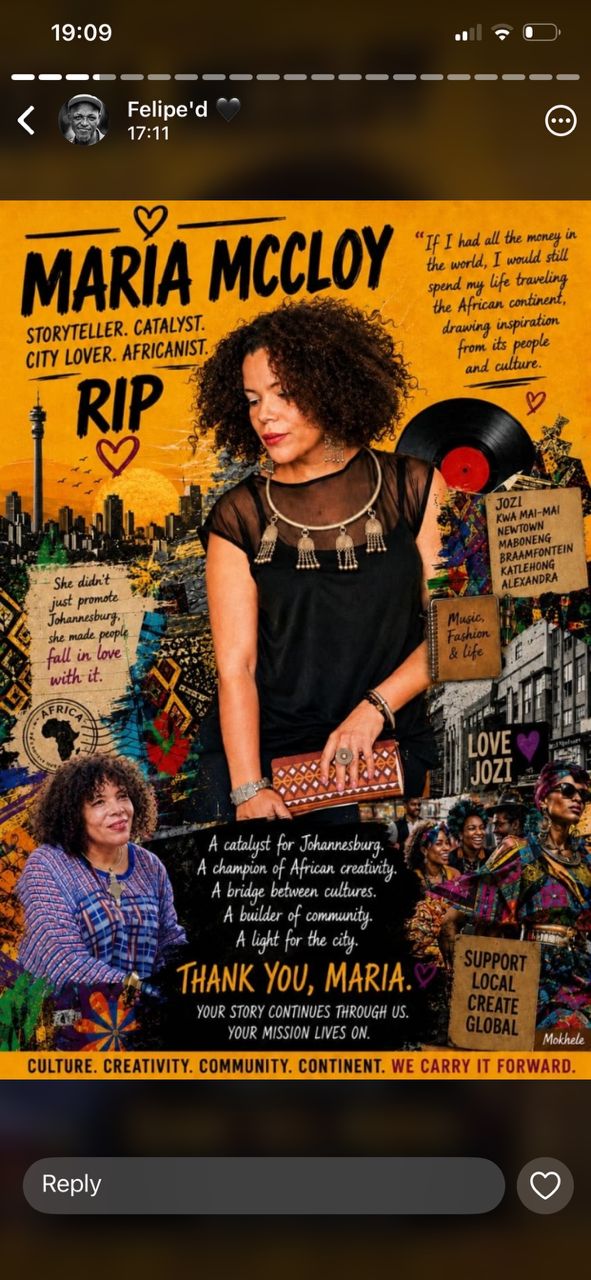
Ambassador Ayanda Ngwane, CEO of Ayanda Media Network, led the tributes with words that captured what so many felt but struggled to express. “To know you is to cherish you forever,” she wrote.
“You were truly full of life — a beautiful soul who carried light, love, and warmth everywhere you went. You had a rare way of making every moment memorable, every space brighter, and every person around you feel seen and valued.” For Ngwane, the loss was not merely professional — McCloy was a sister in spirit, someone whose love and loyalty ran deeper than the industry that brought them together.
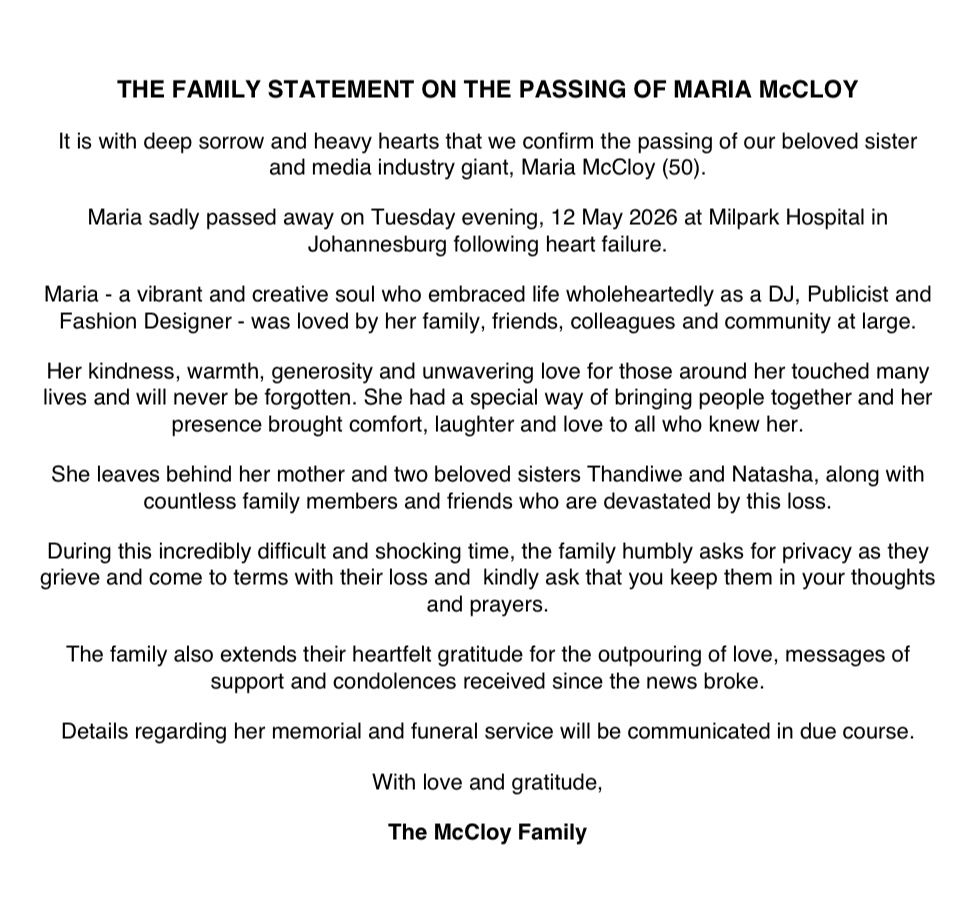
The South African entertainment world lost one of its most consequential voices this week with the passing of Maria McCloy — publicist, designer, DJ, and cultural visionary — who died of heart failure at Milpark Hospital in Johannesburg. She was 50.
To describe McCloy simply as a media strategist would be to diminish the full weight of what she built. Across several decades, she operated as an architect of post-apartheid South African identity — spotting raw talent before the industry knew where to look, crafting narratives that introduced landmark artists to the mainstream, and championing indigenous aesthetics at a time when the global spotlight had yet to turn toward the continent.
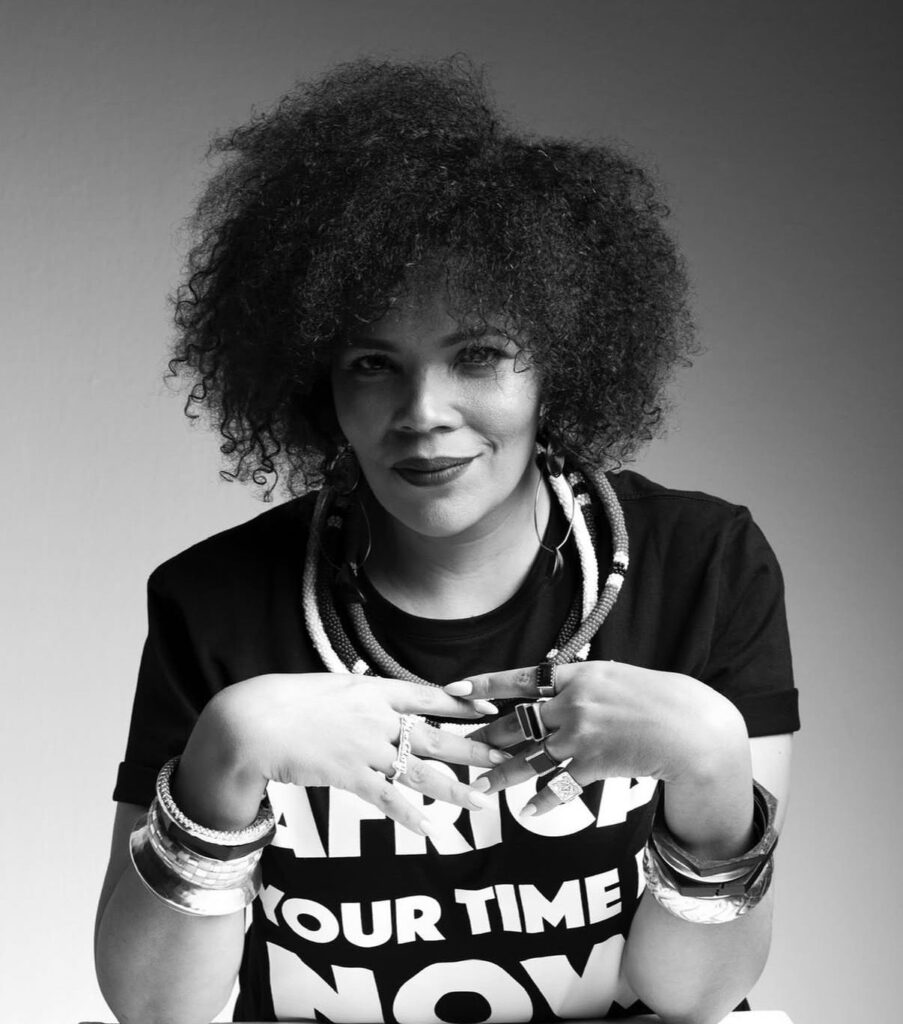
Her fingerprints are on the foundations of modern African youth culture. During the explosive rise of kwaito and hip-hop in the late 1990s and early 2000s, McCloy worked largely behind the scenes, engineering the pathways through which a generation of artists found their audiences.
TkZee, one of South Africa’s most celebrated music groups, publicly credited her with writing the very first article ever published about them — a detail that speaks volumes about how early she arrived, and how far she could see.
Television personalities Minnie Dlamini, Azania Mosaka, and Melanie Bala were among the industry figures who paid tribute, each noting her rare generosity in a world too often defined by gatekeeping.
Music In Africa remembered her as a dedicated mentor who invested real time in developing junior writers and journalists, quietly building the next generation of cultural critics.
In her later years, McCloy channelled her love of African aesthetics into a footwear and accessories line that carried bold, indigenous prints into high-fashion spaces — a final testament to her belief that African creativity deserved the grandest of stages.
The McCloy family, in confirming her passing, described her as a vibrant soul who embraced life fully — one whose warmth, generosity, and rare ability to unite diverse artistic communities would remain her most enduring legacy.
She was 50. The culture she helped build will carry her name far longer.
