

Newly installed UK Prime Minister Andy Burnham assumed office on Monday, immediately clearing out cabinet members loyal to his predecessor while outlining a 10-year strategy to tackle cost-of-living challenges and signaling a turn toward left-wing policies.
After replacing Keir Starmer at Downing Street, Burnham launched straight into official duties, conducting individual phone calls with US President Donald Trump and Ukrainian President Volodymyr Zelensky prior to naming his ministerial appointments.
The 56-year-old leader committed to re-industrializing the nation, decentralizing political power, and eradicating street homelessness following his meeting with King Charles III at Buckingham Palace, where he officially accepted the mandate to form a government after Starmer’s exit.
Marking the monarch’s fourth prime minister since ascending the throne in 2022, and the seventh British leader in just over ten years, Burnham stated that the country urgently required to demonstrate to the global community that it could “regain stability”.
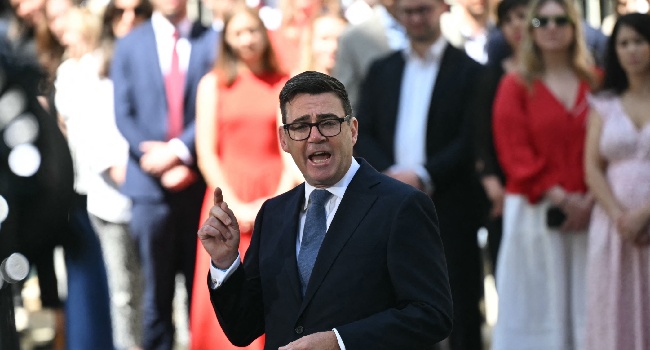
Arriving at Downing Street alongside his wife, Marie-France van Heel, Burnham was welcomed by enthusiastic cheers from supporters and family members. Addressing the public outside Number 10, he vowed to establish “a new political model” and “build a new economy”.
During his initial discussion with Trump, Burnham emphasized his “commitment to defence and security”, according to a spokesperson for the UK government. In his dialogue with Zelensky, he reiterated Britain’s “resolute commitment” to supporting Ukraine against the ongoing Russian invasion, Downing Street reported.
Burnham acted rapidly to assert control over the administration by removing key Starmer allies from the cabinet, including Rachel Reeves and David Lammy, while reassigning existing ministers and elevating close supporters.
Former Defence Secretary John Healey was named finance minister to replace Reeves, Ed Miliband took over as foreign minister, and prominent left-wing political figure Angela Rayner returned to a cabinet post. Wes Streeting, who previously opted against challenging Burnham for the Labour leadership, was appointed defence minister.
Meanwhile, Shabana Mahmood retained her post as interior minister to proceed with tough reforms to the UK’s asylum framework.
In a brief address, Burnham stated he would “bring forward a new plan for Britain, a 10-year plan”, though he did not disclose specific details. Starmer had similarly pledged a “decade of national renewal” before Labour lawmakers removed him from leadership in favor of Burnham, who had returned to parliament only four weeks earlier.
Burnham promised to “give people some breathing space now, some help with the cost of living”, adding that initial measures would be announced starting Tuesday.
He also declared that his primary order of business would be a commitment to “end rough sleeping”, a policy initiative he previously pursued as a regional mayor in northern England with mixed success.
His initial platform further included plans to re-industrialize Britain using public procurement mechanisms and expand public housing construction.
Reflecting on past economic policy, he reiterated his view that “in the 1980s Britain took some wrong turns”, pledging to move authority away from Westminster and “put life’s essentials back under stronger public control to make them affordable”.
Starmer previously left Downing Street alongside his wife, maintaining in his closing remarks that his two-year tenure had left the nation “stronger and fairer”.