



Pressure is escalating on Spanish authorities following a mass border crossing in late July, when roughly 72,000 migrants crossed into the North African enclave of Ceuta from Morocco. Spanish Foreign Minister Jose Manuel Albares met with local officials on Tuesday to address the situation, reassuring the public that border security and the integrity of the European Schengen area remain intact.
“The integrity of the Schengen area is fully guaranteed in Ceuta and Melilla,” Albares stated, while also advocating for enhanced European Union support tailored to the unique economic and social conditions of the two enclaves.
Central government estimates indicate that approximately 70,000 migrants have returned to Morocco. However, thousands stay behind in Ceuta, including hundreds of unaccompanied minors who cannot legally undergo immediate deportation. This remaining group has stretched the resources of the 84,000-resident enclave, creating significant strain on water, food, shelter, and medical infrastructure, alongside sparked local protests.
Estimates regarding the remaining population differ sharply. While Madrid estimates the number of remaining migrants at roughly 2,500, Ceuta’s conservative Popular Party leader Juan Jesus Vivas places the figure between 8,000 and 11,000. Calling the current situation “unsustainable,” Vivas has urged central authorities to set up dedicated confinement facilities.
“A space that acts as an internment centre for foreigners must be set up, where these people can be held and remain confined,” Vivas said, arguing that keeping migrants off public streets would expedite processing and removal operations.
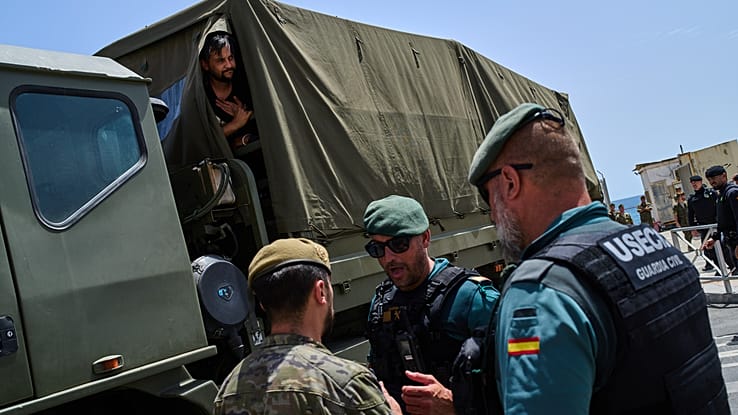
The situation has triggered broader political friction. Conservative and far-right regional governments have resisted taking in relocated unaccompanied children, creating a political stalemate with Spain’s left-wing central government. In response, Madrid has boosted state security forces in the area, with Minister for Regional Relations Angel Victor Torres confirming a 40 percent increase in Civil Guard personnel. Torres stated that reuniting children with their families remains the primary objective, making no mention of potential detentions.
The border event has also caused international ripple effects within Europe. Italy recently instituted border controls for travelers arriving from Spain, leading Madrid to enact matching reciprocal checks. As Spain petitions the European Union for broader assistance, local administrators remain focused on managing security, legal commitments to minors, and basic humanitarian logistics.


