


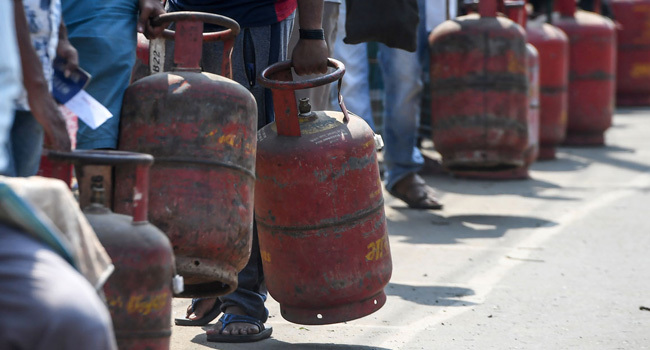
In a bid to halt the hoarding of Liquefied Petroleum Gas (LPG) and its illegal diversion to neighboring nations, the Federal Ministry of Petroleum Resources has called an emergency stakeholders’ meeting involving the Department of State Services (DSS), the Economic and Financial Crimes Commission (EFCC), and the Nigeria Police Force.
According to the Nigerian Midstream and Downstream Petroleum Regulatory Authority (NMDPRA), this urgent intervention responds to the recent spike in cooking gas prices. The collaboration seeks to create synchronized strategies to stabilize the market, boost supply, and ensure affordability nationwide.
The high-level session brought together producers, regulators, marketers, terminal operators, industry associations, and government officials to dissect the causes of the price surge and implement practical solutions across the value chain.
During the session, Patience Oyekunle, the Permanent Secretary of the Ministry of Petroleum Resources, highlighted that LPG is essential for domestic use and plays a vital role in the country’s energy transition goals.
She pointed out that the skyrocketing prices are straining household finances and driving up the cost of basic goods, calling for unified action to make cooking gas affordable again.
Similarly, the Minister of State for Petroleum Resources (Gas), Ekperikpe Ekpo, shared that President Bola Tinubu is deeply concerned about how these rising costs affect citizens and has ordered relevant bodies to take immediate, proactive measures.
He stressed that a boost in supply must be paired with efficient logistics, transparent pricing, and better infrastructure so that everyday consumers feel the impact of these interventions.
On the regulatory side, Mallam Rabiu Umar, the Authority Chief Executive of the NMDPRA, acknowledged that high landing costs are still driving prices up.
However, he expressed optimism that current efforts across the value chain would relieve market pressure in the coming weeks, noting that the Authority is teaming up with producers to ramp up local supply and tighten market monitoring.
Presenting the data, Ogbugo Ukoha, the Executive Director of Distribution Systems, Storage and Retailing Infrastructure (DSSRI), pointed to infrastructure deficits, local supply constraints, logistical hurdles, market distortions, and global supply interruptions as the main drivers behind the price hikes.
Despite these issues, the NMDPRA noted positive developments following recent talks with suppliers, producers, and terminal operators. Ukoha revealed that national LPG supply sufficiency jumped from 11 days to 22 days, while the average daily supply climbed from 4,262 metric tonnes in May 2026 to 5,040 metric tonnes in June 2026.
While various stakeholders pledged to support the government’s initiatives, they also raised concerns regarding existing bottlenecks in transportation, storage, and distribution.
To counter these challenges, the stakeholders agreed on several measures, including tighter market surveillance, aggressive enforcement against illegal practices, expanded storage infrastructure, boosted domestic production, better product tracking, improved data access, and stronger industry collaboration.
Wrapping up the meeting, the Minister ordered all parties to take swift action to eliminate market inefficiencies and safeguard consumers. He emphasized that the success of these measures would ultimately be judged by increased gas availability, better distribution, and lower prices for Nigerians.