
The Gambia’s Independent Electoral Commission on Thursday officially unveiled five candidates cleared to contest next month’s presidential election, confirming that incumbent President Adama Barrow will seek a third term despite earlier pledges not to run again.
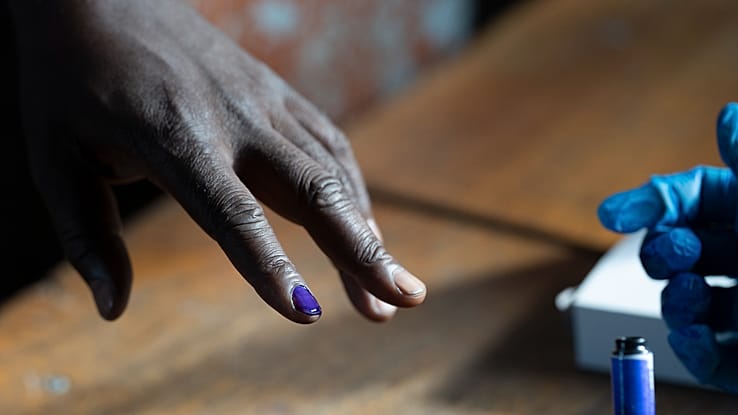
Voters in the small West African nation will head to the ballot box on December 5, with a two-week official campaign period scheduled to kick off next Monday.
Alongside Barrow, the roster features veteran opposition chief Ousainou Darboe and youth favorite Talib Ahmed Bensouda, who stepped down last week as mayor of a major suburb outside the capital, Banjul. Bensouda’s inclusion ends weeks of uncertainty following government accusations of financial impropriety late last month—a move that had fueled rumors of his potential disqualification and fears of widespread unrest.
Thursday’s announcement formalizes the nomination stage after the electoral body received 18 initial applications and spent a week and a half reviewing paperwork with each hopeful. It remains unclear whether any additional candidates will be announced.
At the top of the ticket is President Barrow, leader of the National People’s Party (NPP). Although running for a third term is legally permitted under The Gambia’s 1997 constitution, many citizens had initially expected him to step aside. Following Barrow’s initial 2016 victory, there were widespread expectations that the country would adopt a new constitution enforcing presidential term limits; however, lawmakers have twice voted down draft proposals that would have introduced those caps.
Barrow first came to power in 2016 after a shock election victory over longtime authoritarian ruler Yahya Jammeh, bringing an end to a 22-year regime plagued by allegations of torture, death squads, and widespread human rights abuses. While Jammeh has lived in exile in Equatorial Guinea since 2017, he retains a loyal base at home and continues to comment on domestic politics.
The Opposition
Leading the challenge against Barrow is former vice president Ousainou Darboe of the United Democratic Party (UDP). This marks Darboe’s fifth bid for the presidency, having finished as the runner-up in each of his four previous attempts.
Bensouda, who has surged in popularity among young voters, was a member of Darboe’s UDP until breaking away last year to establish his own political movement, Unite. Until resigning last Friday to focus on his presidential campaign, he served as mayor of the Kanifing Municipal Council on the outskirts of Banjul.
Over the past few months, Bensouda has drawn massive crowds to his rallies, even making inroads in traditional Barrow strongholds such as the Central River and Upper River regions. His momentum accelerated after severe, prolonged power outages began gripping the nation in June, sparking nights of spontaneous, chaotic protests where angry residents blocked roads and demanded Barrow’s resignation.
Bensouda’s resignation as mayor came on the heels of a late October government report that accused him of financial misconduct and recommended his removal from office, raising concerns he might be barred from the presidential ballot. His party dismissed the findings as a “political manoeuvre”.
Completing the five-person lineup are physician Isatou Touray, who makes history as the nation’s first female presidential nominee, and Modou Lamin Sima of the Alliance of Progressive Citizens (APC).
