
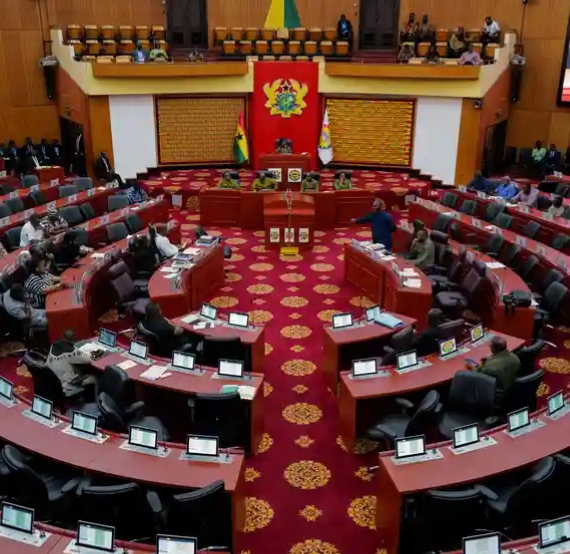
Ghana has officially introduced its new National Ethics and Anti-Corruption Action Plan (NEACAP).
Unveiled by President John Dramani Mahama at the University of Ghana in Accra, the five-year strategy aims to improve institutional coordination, enhance oversight, champion ethical leadership, and increase public involvement.
Mahama described corruption in the country as “a national development challenge” that weakens institutions, discourages investment and erodes public trust. He stressed that a successful outcome requires a collective effort, stating that the fight against corruption requires the participation of all Ghanaians.
While Ghana is recognized as one of West Africa’s most stable democracies, ongoing systemic graft continues to hurt public services, including healthcare, infrastructure, and sanitation. The new initiative replaces a previous anti-corruption plan that faced criticism for failing to deliver due to inconsistent execution.
The launch follows a period of stagnation in international rankings. On Transparency International’s 2025 Corruption Perceptions Index (CPI), Ghana scored 43 out of 100, ranking 76th globally.
Though above the regional average for Sub-Saharan Africa, the nation continues to trail countries like the Seychelles, Cabo Verde, and Botswana. Transparency International Ghana attributes this flat performance to weak enforcement, political interference, and lagging institutional reforms.
The financial impact remains severe.
Mary Awelana Addah, Executive Director of Transparency International Ghana, emphasized that the core problem is not a lack of watchdog bodies, but a lack of independence and operational power.
“The corruption problem in Ghana is a very large one. It’s been very costly to the state. It is endemic and systemic in nature,” Addah told DW.
She noted that financial irregularities highlighted in the Auditor-General’s 2024 report alone created a deficit of nearly 15 billion euros. Addah explained that while the new framework features sharper metrics and public reporting elements, political will remains the deciding factor.
“We have the laws. We also have the institutions. But enforcement remains inconsistent. Sanctions are very weak, and the powerful actors in our system are always insulated from the consequences of corruption,” she told DW.
She added that public confidence will only return when citizens see tangible accountability, stating, “We want to see prosecutions go through.”
Media and civil society organizations are equally vocal about the need for concrete outcomes.
Speaking at an anti-corruption forum in Accra, Sulemana Braimah, Executive Director of the Media Foundation for West Africa, noted that progress has been “slow and uneven.”
“The gap between investigative reporting and actual sanctions remains a critical challenge,” Braimah warned, adding that a failure to hold corrupt officials accountable threatens to erode public trust in both state institutions and the press.
DW journalist Eric Mawuena Egbeta pointed out that civil society helped shape this version, and its shorter five-year timeline allows for a quicker evaluation.
However, he noted that the plan still faces skepticism from a public tired of empty political rhetoric. Egbeta observed that political parties frequently shift their stances depending on whether they are in office or opposition.
“When they are in opposition, they will see everything that is wrong with corruption, and they will use this a whip against the party in government.
But when they assume the reins of power, the narrative changes,” Egbeta noted.
Ultimately, governance experts agree that the success of NEACAP will rest entirely on whether the state can independently investigate and prosecute corrupt officials without political interference.
