



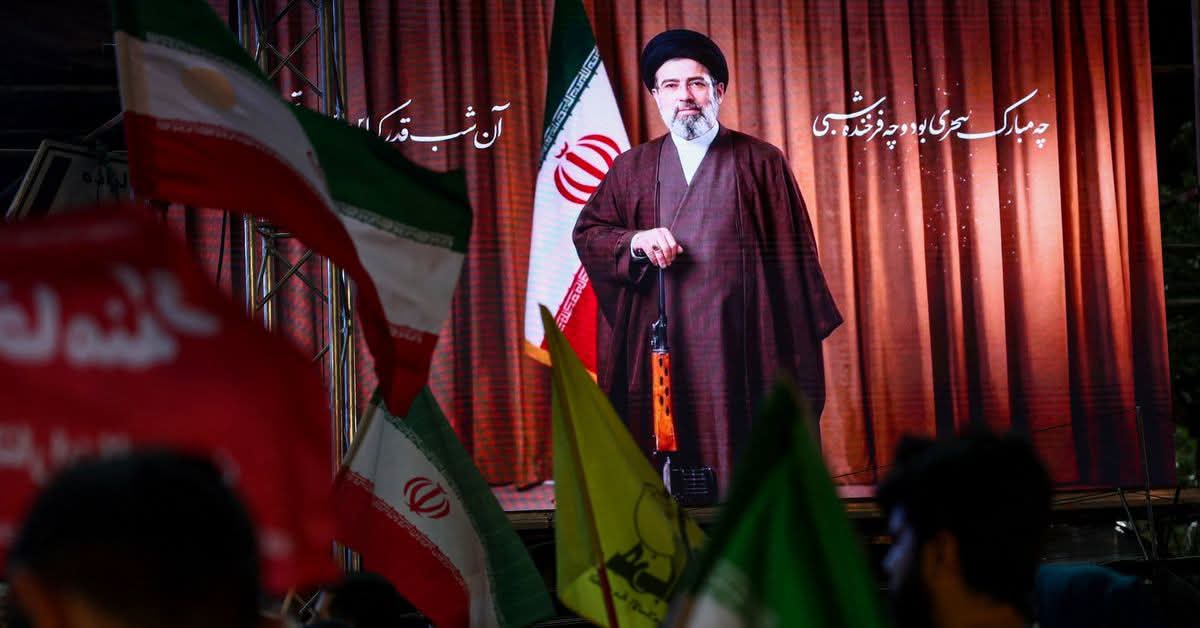
Iran’s supreme leader, Ayatollah Mojtaba Khamenei, said on Thursday he approved a deal signed by President Donald Trump to end the Middle East war, even as the US lifted its blockade of Iranian ports.
The agreement, signed by Trump and Iranian President Masoud Pezeshkian, sets in motion 60 days of talks between the two foes on wider issues, including Iran’s nuclear programme. It remains unclear whether a planned signing ceremony and talks in Switzerland will proceed on Friday as earlier announced.
Oil prices fell sharply after the deal was signed, though shipping activity remained limited in the Strait of Hormuz, the critical energy corridor Iran had blockaded during the conflict and which is expected to reopen under the agreement’s terms.
Khamenei, who became supreme leader after his father Ali Khamenei was killed in an airstrike on the war’s first day, February 28, said in a written statement that he approved the deal despite holding a “different view.” He said he granted permission based on officials’ commitment to “protect the rights of the Iranian nation,” adding that future negotiations with the US do not mean “accepting the enemy’s point of view.
“The US military said it lifted its naval blockade of Iranian ports on Thursday, though warships “will remain in the general area.” Maritime trackers reported Saudi oil tankers and a French LNG vessel transiting the strait. Iranian state TV said vessels must now apply for passage through a new government oversight body, with no fees charged for 60 days.
US Vice President JD Vance said he plans to travel to Switzerland for “technical negotiations” this weekend, though he cautioned the plan “could change.” Iran’s Tasnim agency said nothing has been confirmed about its delegation’s travel.
French President Emmanuel Macron, who hosted the signing at the Palace of Versailles, said he did not believe the war was “totally finished.” The deal commits Washington to immediately waive oil sanctions on Iran and, pending a final nuclear agreement, facilitate a $300 billion reconstruction fund backed by regional nations.


