


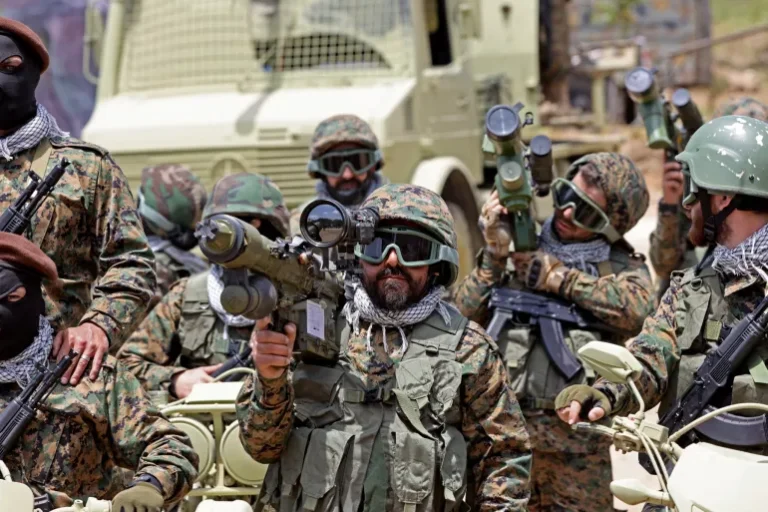
A newly brokered ceasefire between Israel and Hezbollah was reached on Friday, according to a US official, following a wave of deadly clashes in Lebanon that severely threatened a broader Middle East peace accord less than 48 hours after its signing.
The escalating violence forced the postponement of highly anticipated diplomatic talks between the United States and Iran, which were slated to begin Friday in Burgenstock, Switzerland. The Swiss resort overlooking Lake Lucerne was set to host US Vice President JD Vance and Tehran’s top negotiator, Mohammad Bagher Ghalibaf, to kick off two months of negotiations on critical issues left out of the initial deal, including Iran’s nuclear program. Switzerland’s foreign ministry confirmed the delay but stated it “remains ready to facilitate these talks.”
Despite the diplomatic setback, maritime activity showed signs of recovery in the Strait of Hormuz, a critical shipping lane that had been effectively shut down during the conflict. Even so, Iran’s top negotiator delivered a stark warning, declaring that Tehran would not compromise on its red lines and that its finger was still “on the trigger”.
The foundational peace agreement, signed earlier this week by US President Donald Trump and Iranian President Masoud Pezeshkian, was designed to halt a war that erupted on February 28 after US-Israeli airstrikes killed Iran’s supreme leader, Ayatollah Ali Khamenei.
A central objective of the accord was ending the hostilities in Lebanon—a condition Iran has consistently demanded. However, Israel’s persistent military operations there have become a major point of frustration for Washington.
Prior to the truce announcement, the Israeli military reported striking over 80 Hezbollah targets in Lebanon, killing dozens of fighters. Lebanese authorities stated that Israeli strikes on Friday killed 47 people and wounded 97 others, while Israel reported the deaths of four of its own soldiers.
The immediate ceasefire was ultimately pushed through by American and Qatari mediators following intense discussions with Israel and Iran, a development later confirmed by a Gulf diplomat. However, the stability of the truce remains highly precarious; Lebanese state media reported an Israeli airstrike in the southern Jezzine region shortly after the announcement.
Deep political rifts also threaten the longevity of the agreement. A similar truce in April failed to stop the violence.
Just hours before the latest deal, Israeli Prime Minister Benjamin Netanyahu asserted that the military would remain in Lebanon “as long as necessary” and vowed to make the Iran-backed group pay a “heavy price” for its provocations.
Following the deaths of the Israeli soldiers, far-right National Security Minister Itamar Ben Gvir took a harsher stance, declaring that “all of Lebanon must burn”.
In response to the hostilities, Iranian Foreign Minister Abbas Araghchi fired back, accusing Israel of only being interested in “permanent war”.


