



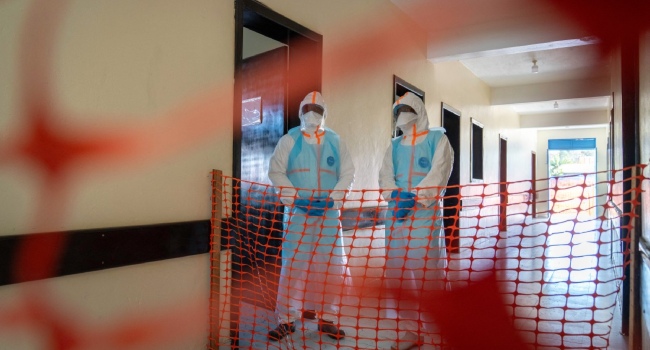
The Federal Government has intensified health screening and surveillance across Nigeria’s land borders, airports, and seaports in response to an outbreak of the Bundibugyo strain of the Ebola virus disease.
This proactive measure comes as the World Health Organization (WHO) lowered its count of suspected Ebola cases in central Africa to 116, down from a previous estimate of over 900, while confirmed cases have reached 330.
The Federal Ministry of Health and Social Welfare confirmed the strategy in a statement released on Tuesday, signed by Ado Bako, the Assistant Director of Press and Public Relations.
The ministry clarified that while there are no confirmed Ebola cases within Nigeria, heightened safety protocols are now active across the country to protect public health. Under these rules, any traveler flagged as high-risk or showing symptoms linked to Ebola or other viral hemorrhagic fevers will face secondary screening, isolation, and medical referral.
“The ministry wishes to reassure Nigerians that there is presently no confirmed case of Ebola Virus Disease in Nigeria. However, in line with the Federal Government’s commitment to strengthening national health security and preventing cross-border disease transmission, heightened preparedness measures have been activated nationwide,” the ministry stated.
To enforce this, border surveillance has been stepped up as a core defense. Health officers at all points of entry are required to perform mandatory temperature checks using handheld thermometers and infrared thermal scanners, review travel histories, collect health declaration forms, and conduct advanced risk profiling on incoming travelers.
According to the ministry, authorities have successfully initiated “enhanced traveler risk assessment and screening procedures at designated points of entry” as well as “secondary screening, isolation, and referral mechanisms for travelers presenting symptoms consistent with viral hemorrhagic fevers.”
This aggressive response mirrors the strict border vigilance Nigeria utilized during past public health crises, such as the 2014 Ebola outbreak and the COVID-19 pandemic.
To ensure early detection within the country, internal surveillance networks have also been reinforced. The government is leaning on community-based tracking and the monitoring of active public health alerts.
READ MORE: WHO declares Ebola emergency over DRC, Uganda outbreak
The statement confirmed that “Enhanced Integrated Disease Surveillance and Response activities nationwide” and “strengthened event-based and community-based surveillance systems” are currently underway to catch any potential case immediately.
Additionally, Public Health Emergency Operations Centres have been mobilized, and rapid response teams at both state and national levels are on standby. Hospitals and clinics nationwide have been instructed to optimize their triage systems, step up infection control, and report any red flags immediately.
“Healthcare facilities nationwide have also been advised to maintain a high index of suspicion for viral hemorrhagic fevers, strengthen triage systems, promptly isolate suspected cases, and adhere strictly to established reporting protocols,” the ministry said.


