

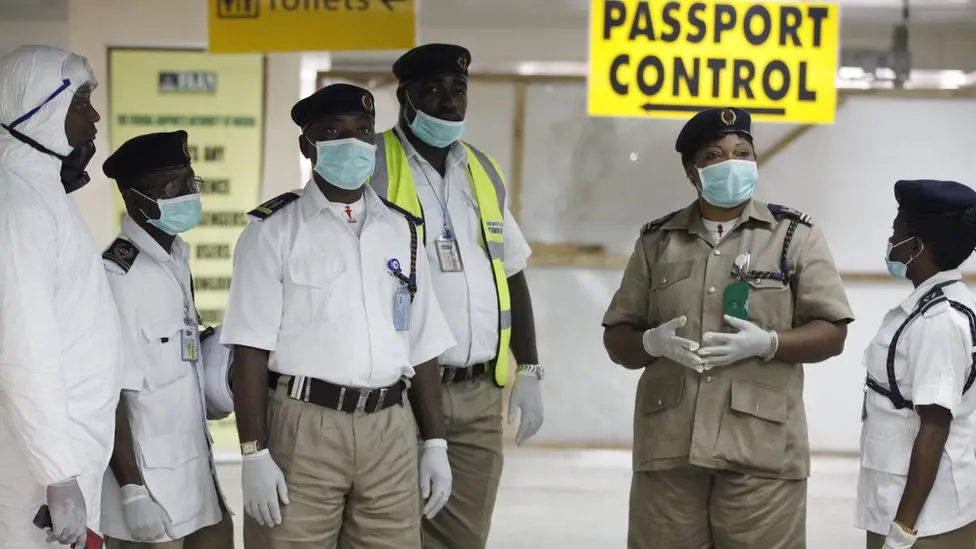
In response to a new outbreak of the Ebola Virus Disease in Uganda and the Democratic Republic of the Congo, the Federal Government of Nigeria has activated emergency surveillance measures at all points of entry, including mandatory screening for inbound passengers and returning Hajj pilgrims.
These preventive measures involve the rollout of a dedicated digital Ebola screening portal for all Nigeria-bound travellers, heightened monitoring at international airports, and intensified collaboration between health and aviation authorities to prevent the disease from entering the country.
The strict intervention follows the World Health Organization’s declaration on May 17, 2026, which classified the latest Ebola outbreak, driven by the Bundibugyo virus strain, as a Public Health Emergency of International Concern.
Don Spiff, the Director of Operations, Licensing and Training Standards at the Nigeria Civil Aviation Authority (NCAA), revealed that all travellers to Nigeria must complete an Ebola health questionnaire prior to boarding.
“All passengers flying to Nigeria will have to fill out the Ebola questionnaire before they board the flight,” he said.
READ MORE: WHO declares Ebola emergency over DRC, Uganda outbreak
This initiative is a coordinated effort led by the Nigeria Centre for Disease Control and Prevention (NCDC) alongside aviation and health regulators.
The timing of these measures is particularly vital as thousands of Nigerian pilgrims are scheduled to return from Saudi Arabia starting June 4. They will arrive through designated international airports in Lagos, Abuja, Port Harcourt, Enugu, and Kano.
While acknowledging that some pilgrims might face difficulties with the online platform due to literacy barriers, Spiff assured that tour operators, NCDC officials, and Federal Airports Authority of Nigeria (FAAN) medical personnel would be on hand to assist.
Furthermore, specific arrangements have been established for Uganda Airlines, which operates three weekly flights into Lagos. Its Sunday and Monday flights will be rerouted through the Hajj terminal at the Murtala Muhammed International Airport to facilitate enhanced screening. Guidelines have also been sent to other major carriers like Ethiopian Airlines, and authorities are considering staggered flight schedules to avoid overwhelming screening facilities. The government plans to assess these initial measures before deciding if further steps are required.
The NCAA has issued an official directive to all international airlines to ensure passengers complete the NCDC Health Declaration Form online before landing. In a May 30, 2026 advisory obtained by Sunday PUNCH, the regulator noted that surveillance has been aggressively scaled.
“The Nigeria Civil Aviation Authority has intensified its surveillance and preparedness measures to prevent the potential importation and spread of the disease into Nigeria,” the advisory stated.
The NCAA is collaborating with the Federal Ministry of Health, the NCDC, Port Health Services, state health ministries, and international health bodies. Airlines are required to notify passengers of these rules, though passengers unable to use the online portal will be allowed to fill out paper forms upon arrival.
This current health scare mirrors the 2014 Ebola crisis, which caused fatalities in Nigeria after being introduced by patient zero, Patrick Sawyer, before being successfully contained.
Screening operations have already commenced at Lagos’s Murtala Muhammed International Airport, where health workers are actively checking temperatures, verifying vaccination logs, and gathering contact-tracing data.
Similar setups are active at other major hubs. An anonymous security official at the Port Harcourt International Airport confirmed that Port Health Services has significantly stepped up its watch.
Adela, a passenger arriving from the United Kingdom, observed that the screening protocols felt much stricter than usual, particularly for those arriving from African nations.
FAAN Managing Director Olubunmi Kuku confirmed that all international gateways are on high alert.
“At present, there has been no reported case linked to Ebola at Nigerian airports. However, surveillance and monitoring have been significantly intensified,” she said.
Meanwhile, the NCDC has activated its nationwide preparedness systems.
NCDC Director-General Jide Idris warned that Nigeria’s high volume of international travel keeps it vulnerable, especially since early Ebola symptoms easily mimic common illnesses like Malaria and Lassa Fever. He urged medical professionals across the country to stay alert for suspected cases and rigidly follow infection control protocols.
These updated border controls highlight the government’s resolve to avert a resurgence of the deadly virus and maintain a resilient defense against cross-border disease transmission.
