


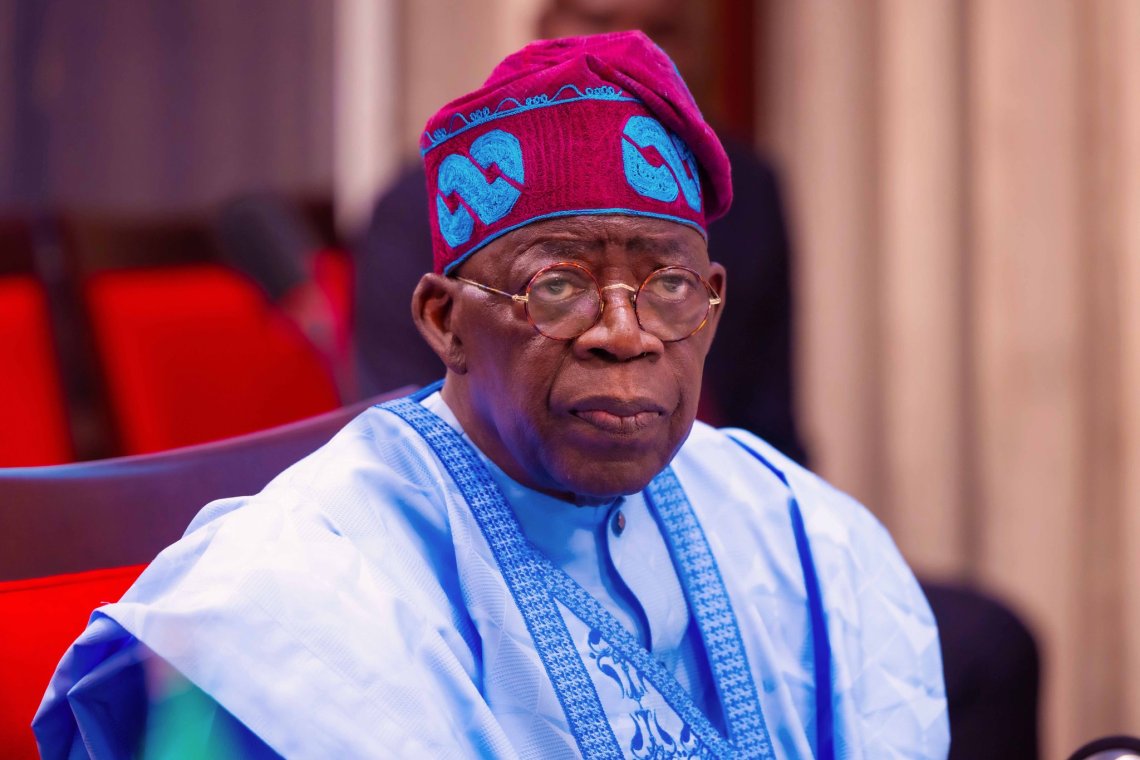
President Bola Tinubu has strongly defended his administration’s decision to scrap the fuel subsidy, asserting that the controversial policy saved Nigeria from a severe financial crisis and paved the way for economic rejuvenation.
The President shared these insights on Friday at the Presidential Villa in Abuja while hosting state governors who visited for a Sallah homage and to commemorate the third anniversary of his presidency.
According to President Tinubu, the long-standing subsidy regime had become completely unsustainable, draining vital public funds that could otherwise be funneled into critical sectors like infrastructure, agriculture, healthcare, and education. He acknowledged that while the decision brought immediate pain and faced heavy public backlash, it was a necessary bitter pill to avert total fiscal collapse.
“It was challenging at the time, but we survived. We faced litigation and accusations. We survived them. Instead of bankruptcy, Nigeria has survived. The economy has recovered. It is growing. Agriculture is booming,” the President stated.
Reflecting on the early days of his administration, Tinubu explained that the tough measures were compelled by the poor state of the economy he inherited.
READ MORE: Tinubu orders school protection overhaul, vows rescue of abducted children
He argued that decades of heavy spending on fuel subsidies heavily burdened government finances while offering very little tangible benefit to everyday citizens. By ending the program, the federal government was able to redirect those resources into long-term development projects and productive sectors nationwide.
As proof of the reforms yielding results, he highlighted ongoing investments in roads, agriculture, irrigation, and power infrastructure.
He specifically noted the immense potential along the Sokoto-Badagry corridor.
“Imagine how many dams on that corridor for irrigation, for farmland, for electricity,” he remarked.
The President extended his gratitude to the state governors for backing his administration’s reform agenda despite intense public criticism. He credited the governors with playing a pivotal role in keeping the public patient during the initial shockwaves of the economic overhaul.
“You have promoted the perseverance of many of our people, asking them to trust this government,” Tinubu noted. “You kept the spirit, you kept the hope. You persuaded our people to be patient and endure these three years of painful reform, during which we put the economy on a reset.”
Furthermore, Tinubu pointed out that the relationship between the federal and state governments has seen a major upgrade since the policy shift. He expressed satisfaction that states are now on a firmer financial footing and are no longer overly reliant on federal bailouts to survive.
“I’m glad governors are no longer borrowing from the federal government and asking for interventions and not knowing how to survive, how to pay salaries, no more,” he said.
He maintained that current macroeconomic indicators show the nation is heading in the right direction, pointing to resurgent investor confidence, improved fiscal management, and the revival of abandoned projects.
“The economy has recovered. Macroeconomic indices are doing very well. Construction is ongoing on roads and infrastructure; the ones abandoned have been rehabilitated,” the President added.
Tinubu reassured the public that his administration remains dedicated to implementing policies aimed at easing hardships, generating jobs, reinforcing food security, and driving inclusive economic growth.
Adding his voice to the event, Vice President Kashim Shettima lauded the President for his bravery in executing such bold reforms despite fierce opposition.
He observed that Tinubu took office at a highly turbulent time in Nigeria’s history but possessed the grit needed to fix long-standing structural flaws.
“Mr President, this is the essence of your leadership. You did not come to power in the season of ease. You came at a time when the house required a builder with the courage to examine the foundation you inherited,” the Vice President said. Shettima also praised the administration’s efforts to weed out corruption and inefficiencies within the nation’s oil sector.
Representing the Nigeria Governors’ Forum, Kwara State Governor AbdulRahman AbdulRazaq confirmed that the removal of the fuel subsidy alongside other fiscal overhauls has significantly boosted revenues allocated to state governments.
AbdulRazaq explained that these increased financial allocations have empowered states to clear lingering salary and pension arrears, fulfill critical obligations, and execute major infrastructure and social investment programs. He emphasized that the reforms have fundamentally boosted the capacity of sub-national governments to deliver quality public services.
The gathering featured an extensive turnout of state leaders, including the governors of Lagos, Nasarawa, Jigawa, Sokoto, Kebbi, Taraba, Niger, Ekiti, Delta, Ondo, Edo, Adamawa, Benue, Enugu, Ogun, and Kogi states, alongside the deputy governors of Borno and Kano states.
The high-level meeting served as a core event for the administration’s third-anniversary celebrations, allowing federal and state leadership to collectively evaluate the real-world impacts of the ongoing economic restructuring on governance and national development.


