

International oil prices have plunged to levels not seen since the outbreak of the US-Israel war on Iran, spurred by growing optimism that diplomatic negotiations could secure a permanent peace treaty.
On Thursday, Brent crude dropped by more than 1 percent, sliding below $71 a barrel and effectively wiping out the premium added since the conflict began.
As of 04:30 GMT, Brent futures for August delivery were trading at $70.82 per barrel. This marks the lowest price point since February 27, the day before hostilities commenced.
This latest downturn means Brent prices have plumetted more than 38 percent from their post-war peak of over $126 a barrel, which was recorded on April 30.
The market shift follows an announcement from Qatar, a key mediator between Washington and Tehran, noting that US and Iranian officials have made “positive progress” during indirect discussions. The talks are focused on ironing out details regarding a memorandum of understanding (MoU) aimed at ending the war.
US President Donald Trump also offered an optimistic assessment of the situation on Wednesday, stating that the “denuclearisation of Iran is moving along well”.
Vandana Hari, founder of the Singapore-based oil market analysis firm Vanda Insights, attributed the decline to a steady increase in oil shipments leaving the Gulf alongside “cautiously optimistic geopolitical sentiment.”
“Several key issues in the MoU remain unresolved, but the two sides appear to have backed off confrontation on the issue of the interim Hormuz transit regime, at least for the time being,” Hari told Al Jazeera.
“I expect crude to continue grinding lower until the backlog of stranded barrels has cleared, and prices could even swing into oversold territory,” she added. “The real test of normalisation of Persian Gulf supply will come after that, necessitating fresh supply-demand balance recalibration.”
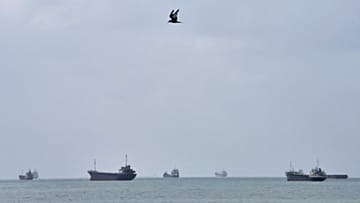
Meanwhile, maritime traffic through the crucial Strait of Hormuz, which handles a fifth of global oil and liquefied natural gas trade during peacetime, is showing tentative signs of recovery. The rebound follows a sharp drop in traffic after attacks on two commercial vessels last Thursday and Saturday.
According to tracking data from MarineTraffic, at least 40 vessels navigated the strait on Tuesday, up from 27 on Monday and 22 on Sunday. However, traffic is still drastically lower than its pre-war average of roughly 130 daily crossings due to lingering safety anxieties.
Under the June 17 MoU signed with the US, Iran agreed to use its “best efforts” to ensure safe vessel passage. Despite this, Tehran has repeatedly asserted exclusive control over movement through the waterway.
Since the war started, MarineTraffic has logged at least 49 attacks on commercial ships in the strait, most of which were claimed by Tehran or attributed to Iranian forces.
Neil Crosby, an oil market analyst at Sparta Commodities in Singapore, warned that while Brent’s decline shows the market’s “partial conviction” that the fighting is largely over, it is premature to assume prices will remain at these pre-war lows.
“This is by no means a stable or sustainable situation. Not for the politics, as we can all see. But also not for the state of the oil market itself in terms of supply, demand and trade,” Crosby told Al Jazeera.
“Many large moving parts are in play. Low prices are likely to see global crude importers return to the market and clear the glut over time,” he noted. “So in terms of price, I highly doubt that we are ‘out of the woods’ yet.”