



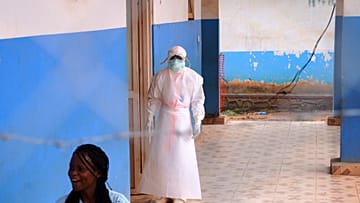
Doctors Without Borders, also known as MSF, issued an urgent warning on Monday calling for a massive scale-up to contain the fastest-spreading Ebola outbreak on record. The rapid spread of the virus across eastern Congo is outstripping local health authorities’ capacity to manage the crisis.
Trish Newport, an MSF emergency coordinator, detailed the immense challenge facing aid workers on the ground. “We should be able to circumscribe the outbreak to go and do preventative activities all around where the outbreak has not yet started. So that zones, health zones, health areas, the Ministry of Health is ready to be able to respond. But we don’t have the capacity today,” said Newport.
The rapid spread of the virus has claimed over 2,300 lives, making it the deadliest Ebola epidemic ever recorded in the Democratic Republic of Congo. Official figures released overnight into Monday indicate 4,945 total cases and 2,325 deaths in one of the country’s most vulnerable areas.
“Here, the speed and growth and spread of this outbreak is much, much bigger. It’s much faster and spreads much bigger than the outbreak in 2014 or the outbreak in 2018. This is extremely concerning,” Newport emphasized.
Marking the nation’s 17th and largest Ebola outbreak, the death toll has now surpassed the 2018-2020 epidemic, which caused 2,299 deaths among 3,481 cases. Recent data highlights the ongoing trajectory, with 101 new cases and 33 additional deaths reported within a single 24-hour period.
To date, over 1,000 individuals have recovered, while 730 remain hospitalized or in isolation facilities. The current wave has infected and killed patients at a pace unprecedented in historical data.
The World Health Organization warned that this surge is on track to surpass the 2014-2016 West African outbreak, which resulted in more than 11,000 deaths. Newport noted that community engagement is a key hurdle, emphasizing the need for public awareness regarding symptoms and care protocols.
“I will say that this outbreak is horrible. It’s horrible. It’s horrible for families. We see family members that come in who have had 15 people in their family die. We rapidly need to scale up to be able to prevent more deaths from happening, more families and communities from being impacted,” she said.


