



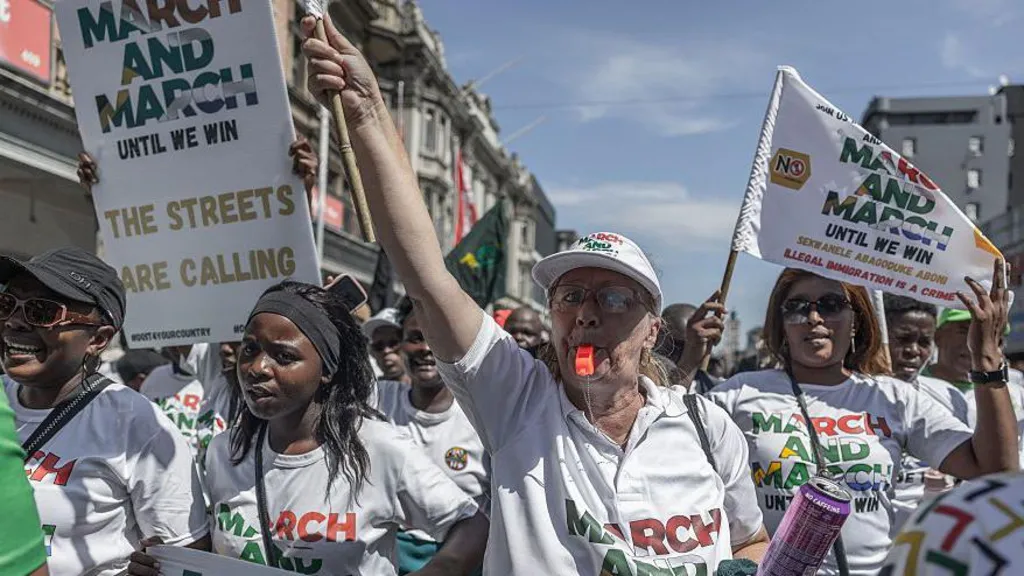
The president of the Nigerian community in South Africa, Frank Onyekwelu, has revealed that the number of Nigerians registered for voluntary repatriation has surpassed 130. This surge follows a fresh wave of xenophobic violence targeting foreign nationals, prompting many to seek a way back to their home country.
This update follows recent directives from President Bola Tinubu, who ordered evacuation flights for citizens wishing to leave. Nigeria’s Minister of Foreign Affairs, Bianca Odumegwu-Ojukwu, previously confirmed that the government is actively gathering details of those affected to facilitate their return.
Speaking on Thursday, Onyekwelu noted that the initial figure of 130 has already grown as more citizens come forward. He explained that beyond the fear of violence, many are grappling with severe economic and administrative hurdles.
“As we speak now, the numbers have increased more than 130. We have other Nigerian citizens that have also applied for such voluntary and free repatriation,” Onyekwelu stated. “Some of them have issues with the economy, economic hardship, they are struggling to survive.”
The documentation process in South Africa has also become a major deterrent. Onyekwelu highlighted that many Nigerians face significant delays when trying to renew residence permits or obtain work authorizations.
“Some of them have applied either to renew their existing residence permit or to get another kind of permit that will allow them to trade or do work or get employed in some companies,” he said.
“But due to the documentation process and the delays and the challenges in terms of requirements that you have to provide as a foreign national, it becomes a bit challenging for them to provide such records or such requests.”
For many, the struggle has reached a breaking point where returning to Nigeria appears to be the only viable path forward.
“So, at this point, many of them have considered their best option is to go back home. Some have worked for two or three years and currently there is no more job or business or resources has finished; and they are now deciding that it’s better for them to go back home, find another source of livelihood and then start up life again, which is considerably easier,” Onyekwelu explained.
He added that many returnees hope that being back with family will alleviate financial pressures, such as high rent, stating: “They believe they will not be dealing with rentals, maybe if they are staying in their family home and they will be able to concentrate, maybe continue with one or two agricultural farming products to sustain livelihood.”
Finally, the rising cost of healthcare in South Africa has played a significant role in the decision for those dealing with illness.
“Some are because of health issues they fell sick or have some health challenges and the cost of treatment as a foreign national here has increased whereby you cannot go to some hospitals at the moment and then receive treatment free as it used to be,” Onyekwelu noted.
He concluded that many now feel “it will be easier and even much cheaper for them to attend health clinic in Nigeria or attend the medical facilities in Nigeria where they might afford the payment.”


