


Yaya of Africa pays tribute to STEVE BIKO ✊🏽 — one of Africa’s greatest sons and fiercest freedom fighters: We remember. We honor. We acknowledge one of Africa’s greatest political prisoners and freedom fighters, STEVE BIKO✊🏽A son of the soil who fought for South Africa until he became a threat to the evil machinery of apartheid — and was brutally silenced.
Today marks 49 years since Steve Biko died in police custody — a death that would outlive the men who caused it and turn a 30-year-old activist into one of Africa’s most enduring symbols of resistance.
Biko was never a soldier. He was a medical student who dropped out of university to build an idea, and it was the idea, more than any weapon, that apartheid’s security police feared most.
In the late 1960s, frustrated by a student movement still shaped by white liberal politics, he broke away to found the South African Students’ Organisation, the seed of what would grow into the Black Consciousness Movement.
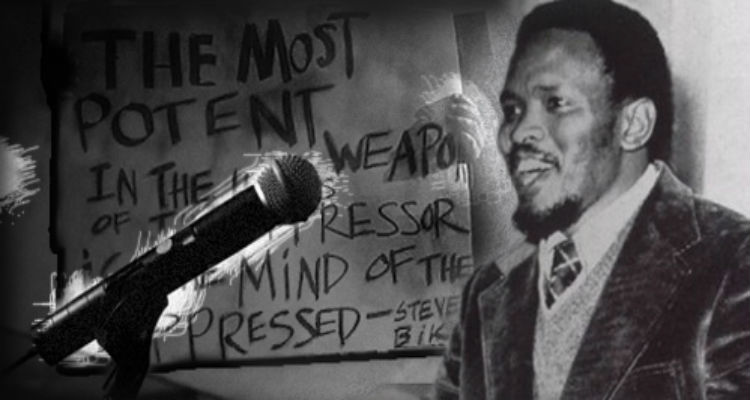
His argument was disarmingly simple and, to the apartheid state, dangerously radical: before Black South Africans could win political freedom, they had to first unlearn the inferiority the system had spent generations teaching them. “The most potent weapon in the hands of the oppressor,” he wrote, “is the mind of the oppressed.”
That single idea rippled outward. It shaped the consciousness of the students who rose up in Soweto in 1976, and it made Biko, by the mid-1970s, a marked man.
In 1973 he was banned — confined to King William’s Town, forbidden from speaking publicly, forbidden even from being quoted in print. He organized anyway, quietly, from the margins the state had forced him into.
In August 1977, security police picked him up at a roadblock. What followed has become one of the defining atrocities of the apartheid era: interrogation, brutal beating, and then — critically injured — a naked, manacled, 1,000-kilometre drive in the back of a police van to a prison hospital in Pretoria, where he died alone on September 12, 1977. The state lied first. Officials claimed he had starved himself.
The inquest tore that story apart, though it would take two more decades — and a Truth and Reconciliation Commission hearing — before the officers involved admitted what they had done. None were ever prosecuted.
What Biko left behind was bigger than the men who killed him. His death turned global opinion against apartheid in a way few single events had. His writing, later collected in I Write What I Like, remains required reading for understanding not just South Africa’s liberation struggle, but the psychology of oppression itself.
Across the continent today, tributes are pouring in — not as nostalgia, but as a charge. The refrain echoing through them is the one Biko’s generation carried into the streets and prisons of apartheid South Africa: Aluta continua — the struggle continues. Nearly half a century after his death, the call being made in his name is not to mourn quietly, but to finish what his generation started: an Africa free of corruption, fear, and the “evil machinery” — as one tribute put it — that his life, and his death, were spent resisting.
Comrades, let there be no fear. No corruption. No excuse to betray the African dream. Our ancestors/grandparents were murdered so that we could be free. So that we could rise. So that we could elevate Africa. Their blood demands our courage. Their sacrifice demands our legacy.
While we are still here, let’s take charge and unite✌️.Aluta Continua, Africa🫱🏾🫲🏿✨✊🏽.


