

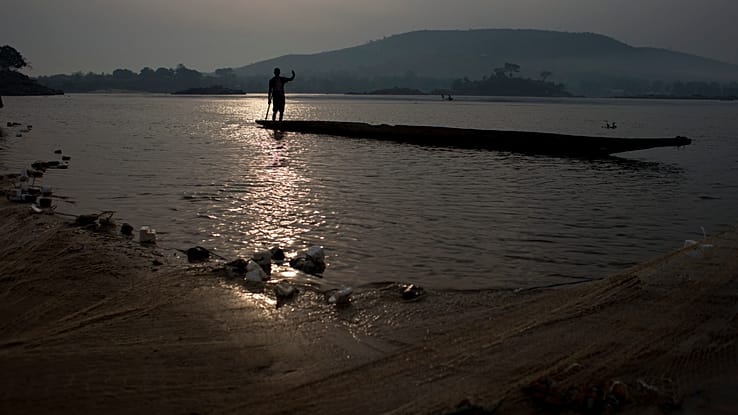
Authorities in the Central African Republic have intensified health screenings along the river border with the Democratic Republic of Congo, following a surge in Ebola cases in the neighbouring nation that has passed 10,000 infections.
At the M’Poko Bac pier frontier post, located southwest of the capital city of Bangui along the waterway, medical personnel are actively informing local residents about the situation and enforcing preventive protocol.
“Passengers arriving by canoe dock at the entry point. Then they disembark one at a time,” explained Maldiana Bagalama, tasked with health screening at the site. “One of our colleagues is there to direct them to the hand-washing station. Next, we brief them on the situation, then direct them to the tent for temperature checks and registration,” she said.
The outbreak remains heavily concentrated in the Democratic Republic of Congo, but the virus has spread to other nations, including Kenya and Nigeria. The situation is further complicated by the extensive 1,500-kilometre border shared by the DRC and CAR, which is porous and difficult to monitor.
“As you know, the same communities live on both sides of the border. As a result, there is a great deal of movement of people and goods,” said Dr Valentin Nebanga, head of the Health Promotion Department at the Ministry of Health.
Life and Trade Continue Along the River
Despite the health threat, daily commercial activities along the Oubangui River remain active. Numerous fishermen, canoe operators, and fish traders rely entirely on this shared aquatic route for their survival.
“We are worried because we work right here, by the river, and if Ebola reaches here we shall be the first to fall victim to it. We’re asking the ministry of health to take far greater precautions,” said Neige, a fishmonger and mother-of-three.
Nearby, canoe operator and father-of-two Foxy Yeti Nzapa voiced similar concerns, noting that transporting passengers without personal protection puts him at risk.
“We transport them between the two countries without any protection. Sometimes we hear that someone over there has died of Ebola. I could also become infected,” he said.
Multi-Agency Response and Community Engagement
Central African authorities maintain that controls have been significantly strengthened at key access points.
“We have entry points staffed by health workers, the Water and Forests Department, Customs, Civil Protection and Internal Security Forces,” said Nebanga. “All passengers, both those arriving and departing, are systematically screened by community health workers.”
Alongside physical border checks, public awareness efforts are underway involving local leaders, neighborhood chiefs, and religious figures to share guidelines on virus prevention. According to health officials, maintaining public participation in safety habits is essential while the country remains free of confirmed Ebola cases.
However, for citizens who rely on river transit and trade, restricting movement is not a realistic option. Health officials acknowledge the continuous challenges they face in maintaining long-term vigilance.
“We’ve not had any cases yet, but our biggest challenge remains retaining staff and keeping them engaged,” said Nebanga. But “we are never fully prepared”, he conceded.
