

In eastern Democratic Republic of Congo, where small-scale mining drives the local economy, the frequent movement of workers between isolated extraction sites is severely complicating efforts to contain an spreading Ebola outbreak.
Miners operating in Iga-Barrière find themselves forced to weigh the growing risk of contracting Ebola against the immediate necessity of paying for housing and food.
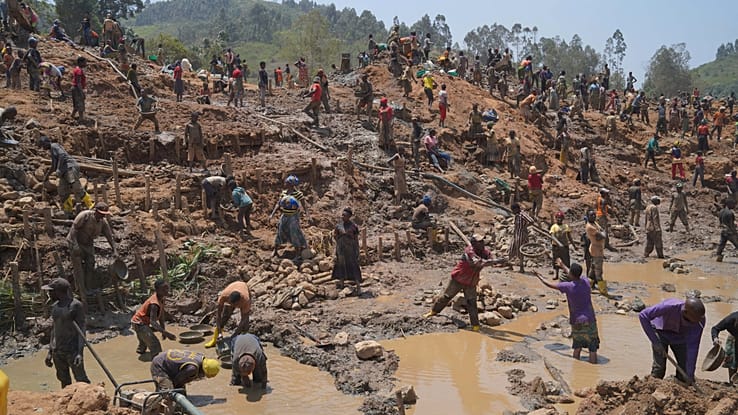
Both men and women work long hours for minimal compensation, often earning just a few dollars each day. A significant portion of this labor force consists of internally displaced individuals living in a nearby temporary camp, having spent decades escaping armed conflict. Other laborers commute daily from adjacent villages and towns.
One miner, Mechac Ngadjole Katavara, has lost 13 family members to the disease and currently faces a complete lack of medical care or preventative vaccines.
“The authorities don’t know what to do about this Ebola virus disease,” said Katavara, who remains displaced and without access to basic sanitation supplies or protective equipment.
“We are displaced by war and life is difficult. That is why we have to work under these conditions,” he added.
Another worker, Daniel Ndjalenga Musingo, traveled from the town of Ngatsupka and has been digging at the Iga-Barrière mine for a month.
Musingo explained that he attempts to maintain physical distance and avoids shaking hands with fellow miners, citing widespread infection in the communities surrounding the dig site.
He urged health authorities and non-governmental organizations to construct an Ebola treatment center directly in Iga-Barrière.
“Patients die on the road while being evacuated to Bunia. If the Ebola treatment center was nearby, people could receive care quickly and recover,” Musingo said.
Artisanal gold mining across the region relies on an exceptionally mobile workforce. Laborers move constantly between mining camps in search of deposits, while also traveling to populated urban centers to trade raw minerals.
This continuous movement severely hampers containment strategies, making it difficult for health officials to trace contacts and isolate infected individuals. Furthermore, response teams report that pervasive misinformation and community distrust continue to undermine medical interventions, though most workers inside the mines remain acutely aware of the virus.
Data from a 2024 report by the Organization for Economic Cooperation and Development indicates that roughly 2 million people work in small-scale and artisanal mining throughout the nation. Beyond gold, eastern Congo contains vast deposits of coltan, tin, and tungsten—resources that have fueled decades of regional conflict while serving as a crucial economic lifeline for residents.
The current outbreak is moving faster than response teams can manage.
With 2,557 reported deaths out of 5,375 confirmed cases spread across six provinces, the trajectory threatens to exceed the deadliest Ebola outbreak on record, which claimed over 11,000 lives in West Africa between 2014 and 2016.
Projections from the Africa Centre for Disease Control show that virus transmission has not yet reached its peak and could potentially triple from its current rate.
To bolster containment, 16,250 vaccine doses arrived at N’djili International Airport in Kinshasa late Friday. These form part of a 70,000-dose commitment announced on Thursday by the World Health Organization and its international partners, with additional shipments expected early next week.
Despite the risks, the economic imperative remains absolute for workers on the ground. Esperance Acheni Nyango, who relocated from the village of Ladile, reported high mortality rates in her hometown.
While she acknowledges her fear of the virus, she continues to dig for minerals because her family depends on the income.
“If I can earn even 10,000 francs ($4.36) so the children can eat, it helps. I am struggling to pay rent. This is why I come here to work,” Nyango added.