
The Democratic Republic of Congo has officially launched a legal battle against Rwanda at the International Court of Justice (ICJ), accusing its neighbor of violating multiple international treaties.
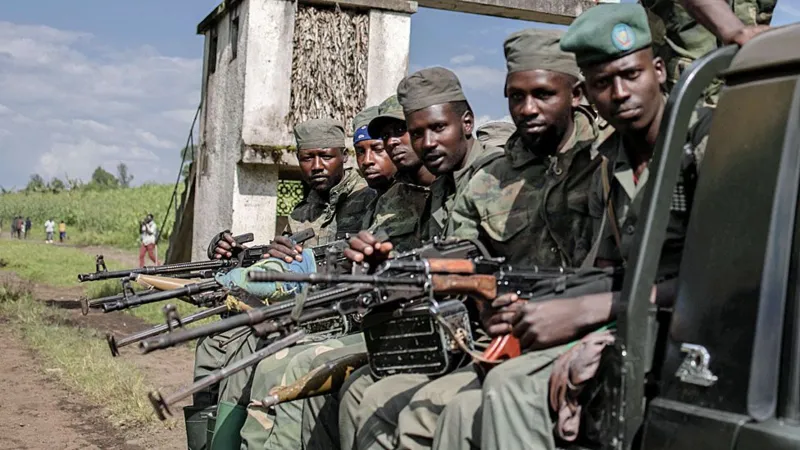
According to a statement from the Congolese government, Rwanda has deployed military forces and supported armed rebel groups to conduct illegal military operations inside DR Congo’s borders ever since the 1994 Rwandan genocide.
On Friday, Congolese Justice Minister Guillaume Andali declared that the nation is demanding accountability for alleged breaches of global conventions.
These include international treaties covering:
The prevention of genocide
Racial discrimination
Women’s rights
Torture
While Rwanda has not yet formally responded to the ICJ filing, it has consistently denied accusations that it supports rebel factions. However, United Nations experts and several Western governments have previously stated that Rwanda provides backing to the M23, a dominant armed group operating in eastern DR Congo.
Through this legal application to the UN’s highest court in the Netherlands, DR Congo is requesting the ICJ to order Rwanda to halt its alleged unlawful actions and award financial reparations to both the Congolese government and the victims of the conflict. The ICJ will now review the claims to determine how the case will proceed.
A History of Legal Friction
This move marks the third time DR Congo has attempted to take Rwanda to the world court:
In 2001, an initial case was voluntarily dropped by Congolese authorities.
In 2006, the ICJ dismissed a second lawsuit, ruling that it lacked the authority to proceed because Rwanda did not recognize the court’s jurisdiction.
Deeply Rooted Contested Borders
The ongoing, decades-long friction between the two nations traces its roots back to the 1994 Rwandan genocide, during which ethnic Hutu extremists shattered the region by slaughtering an estimated 800,000 people, the vast majority from the Tutsi community.
Fearing violent retaliation after the genocide, roughly one million Hutus crossed the border into what is now DR Congo.
This massive migration intensified ethnic rivalries, leaving the Banyamulenge—a marginalized Tutsi group living in eastern DR Congo, feeling severely endangered.
In response, Rwanda’s military invaded DR Congo twice, asserting it was hunting down those responsible for the genocide. During these incursions, Rwanda collaborated with the Banyamulenge and various other armed factions.
One major Hutu group, the Democratic Forces for the Liberation of Rwanda (FDLR), which includes individuals tied to the 1994 genocide, remains active in eastern DR Congo today. Rwanda characterizes the FDLR as a “genocidal militia” and maintains that its presence right across the border poses a direct threat to Rwandan national security.
Furthermore, Rwanda alleges that Congolese authorities are actively collaborating with the FDLR, a claim that DR Congo strongly denies.
The long-simmering instability boiled over again recently when M23 rebels seized control of vast, mineral-rich territories in the east, including the strategic regional capital of Goma.
Despite a US-brokered peace agreement signed by both Rwanda and DR Congo, intense fighting has continued to destabilize the region.
