
Story from TITI AJAYI
ACCRA, Ghana — Every time dark clouds gather over Alogboshie, residents of the low-lying Accra community brace themselves for what may come next.
For years, flooding has been a recurring threat in the densely populated suburb. When a $14 million drainage project funded under the World Bank-supported Greater Accra Resilient and Integrated Development (GARID) programme began in 2024, many believed relief was finally in sight.
Today, that optimism has given way to anxiety.
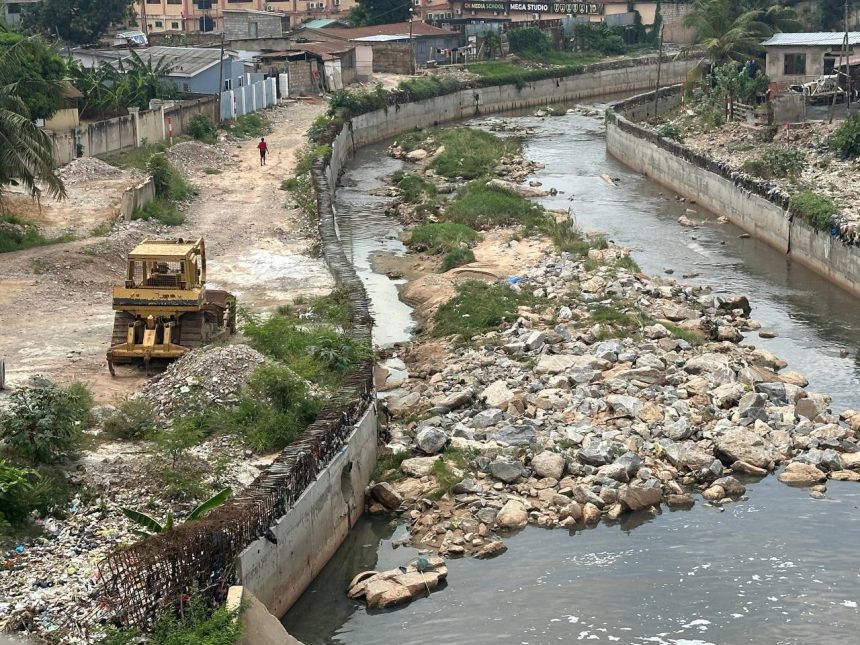
The project, designed to reduce flooding in one of Accra’s most vulnerable communities, has stalled at just over halfway completion, leaving behind open drains, exposed trenches, damaged roads, and growing fears that the unfinished infrastructure could worsen flooding during the rainy season.
Across Alogboshie, deep concrete channels cut through neighbourhoods, some completed, others abandoned midway. Construction equipment has disappeared, workers are nowhere to be seen, and residents say they have received little information about when work will resume.
“What worries us is that the drainage system has been opened up but not completed,” says Moses Gassor, Chairman of the Community Development Committee. “If heavy rains come now, the drains cannot function as intended. We are still exposed to flooding.”
For many residents, the abandoned project has become a daily hazard.
Children navigate narrow paths beside deep trenches on their way to school. Motorists struggle through damaged roads, while pedestrians risk slipping into uncovered drains, especially at night. Pools of stagnant water have also become common, raising concerns about sanitation and mosquito-borne diseases.
The fears are particularly acute because of Alogboshie’s location within the Odaw Basin, an area historically vulnerable to flooding. Residents have not forgotten previous disasters, including the devastating June 3, 2015 flood and fire tragedy that claimed more than 150 lives in Accra.
Many worry that the partially completed drainage network could obstruct the natural flow of stormwater rather than improve it.
The drainage project was expected to be completed in April 2025 after construction began in early 2024. However, officials with GARID say work is currently at a standstill, with only about 58 per cent of the project completed.
According to project authorities, the delays stem from financial and contractual challenges involving the contractor, First Sky Construction. GARID officials say the company failed to renew mandatory performance and environmental compliance securities, preventing the processing of further payments and affecting its ability to continue work.
Despite assurances that discussions are ongoing to resolve the issues and return contractors to the site, residents say the uncertainty is taking a toll on the community.
“We don’t know what is happening,” one resident said. “The rains have started, and every day we are worried about what will happen if there is a major storm.”
Questions are also emerging about accountability. Of the approximately $14 million allocated to the Alogboshie component of the project, reports indicate that nearly $10 million was released to facilitate construction activities. Yet many residents say they have little access to information regarding the status of the funds or a clear timeline for completion.
For a community that has long battled flooding, the unfinished project represents more than an infrastructure setback. It has become a symbol of unfulfilled promises and growing vulnerability.
As the rainy season intensifies across Ghana’s capital, residents say they are left hoping that work resumes before the next major downpour.
Until then, many in Alogboshie will continue watching the skies with apprehension, fearing that the project intended to protect them may instead leave them facing an even greater disaster.
