


Zambians are preparing to vote on Thursday in a pivotal presidential election that pits recent economic progress against growing frustration over the cost of living.
President Hakainde Hichilema, who secured office in 2021 on his sixth attempt, is seeking re-election under the United Party for National Development banner. His victory followed years of heavy borrowing under late former president Edgar Lungu, which had left the nation in sovereign default. Since taking office, Hichilema’s administration has negotiated a major debt restructuring agreement, restored an International Monetary Fund program, and revived economic growth, earning praise from global investors and lenders.
However, many citizens feel the impact of this recovery has been slow to reach daily life. Unemployment, elevated food prices, and widespread poverty remain major concerns, with World Bank data indicating that over 70 percent of the population lives on less than three dollars a day.
“Worldwide there has been recognition that we are doing well but he needs to bring it home,” medical student Semi Malama, 26, told AFP.
As Africa’s second-largest producer of copper, Zambia plans to triple its output by 2031, with Chinese mining firms holding a dominant presence in the market.
The opposition hopes to capitalize on household financial strain, claiming the government’s reforms have not improved daily living standards. While Hichilema initially appeared set for an easy path to re-election, a fragmented opposition coalition recently united behind 55-year-old former minister Brian Mundubile of the National Republican Party.
Although 14 candidates are listed on the ballot, analysts view the contest as a head-to-head race between Hichilema and Mundubile.
“The opposition alliance is bringing energy to their rallies and appealing to youth, women, and rural voters,” Joseph Siegle, director of research at the Africa Center for Strategic Studies, told AFP.
Political analyst Louw Nel observed that Mundubile’s strategy involves “mopping up” support in the northern and eastern regions, which historically served as strongholds for Lungu’s Patriotic Front. However, Nel noted that Mundubile’s late entry into the race and past ties to the Lungu administration could limit his broader appeal.
Up to 8.7 million voters are registered, with women forming the majority. Nearly half of the electorate is aged 18 to 35, positioning young voters as a crucial demographic.
“Ultimately, the election will hinge on whether voters believe continuity offers the best chance of consolidating recent economic reforms, or whether they conclude that change is needed to address immediate economic pressures,” Institute for Security Studies researcher Zenge Simakoloyi told AFP.
The campaign period has experienced occasional violence and claims of voter intimidation. Law enforcement officers used tear gas during clashes between opposing supporters, and Mundubile’s party accused authorities of curbing its campaign efforts. Following an event in Mongu, Mundubile alleged that snipers were present, describing the tear gas as “just the tip of the iceberg.”
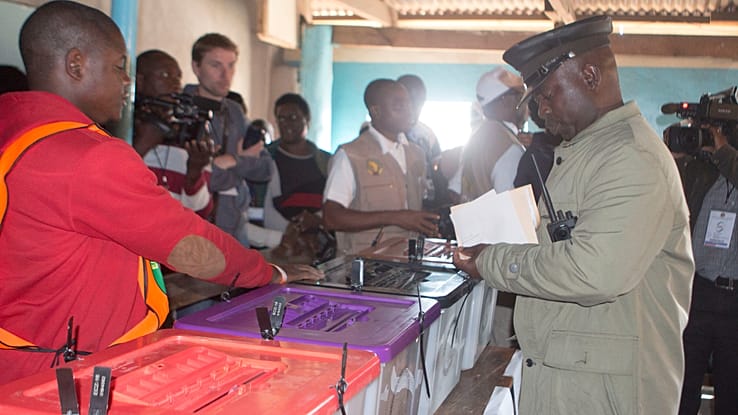
Voting runs from 0600 to 1800 local time on Thursday. In addition to choosing a president, citizens will vote for an expanded parliament, with directly elected seats increasing from 156 to 226. Official presidential results are expected by August 17. A candidate must secure over 50 percent of the valid votes to win in the first round; otherwise, a run-off election will occur between the top two contenders.
Simakoloyi noted that the final result could be determined by “relatively small swings” across Zambia’s 10 provinces. The election serves as a crucial test of stability for one of the region’s most established democracies amid concerns surrounding political freedoms.


