

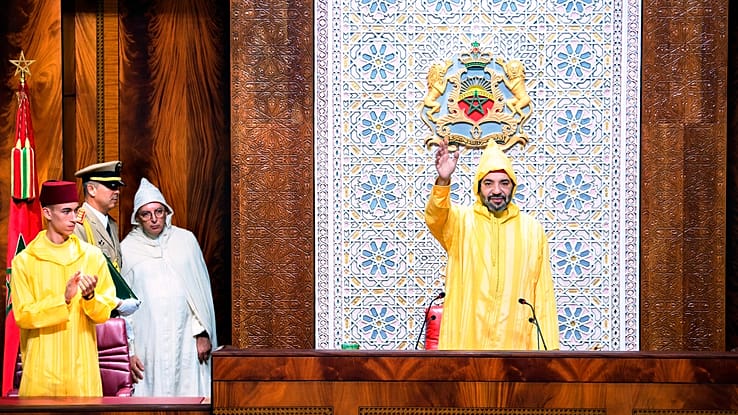
Opening a new parliamentary session in Rabat on Friday, King Mohammed VI of Morocco urged public institutions to place youth matters at the top of their policy priorities.
The monarch’s address follows months of youth-driven demonstrations that brought public attention to economic and social challenges across the nation.
Addressing international relations, the king defended Morocco’s tie with Spain and outlined plans to reshape bilateral cooperation following the July border crossings into the Spanish exclave of Ceuta.
“In the face of the irresponsible statements made by certain political and media circles … we affirm that partnership is a sovereign choice and a voluntary commitment, which cannot be subject to any pressure or threat, nor to any form of blackmail,” he said.
He noted that Morocco intends to present its diplomatic partners with a strategic document outlining a refreshed vision centered on co-development, regional stability, and economic competitiveness.
Many of those who entered the Spanish territory during the late July events were young Moroccans seeking improvements in public healthcare, educational reform, and employment opportunities to combat high unemployment rates.
The monarch advocated for a new wave of economic programs, higher private-sector investment, and expanded opportunities for young citizens. He emphasized the necessity of a unified policy framework to integrate youth initiatives into national development plans.
“Youth-related issues must be placed at the forefront of public policies and of the concerns of governing bodies,” he said.
He further clarified that this goal should be achieved “through the development of an integrated vision that guarantees equal opportunities and encompasses education, skills development, and economic inclusion”.
Beyond youth policy, King Mohammed VI pointed out delays in decentralizing resources and powers to regional authorities, while underscoring the urgency of strengthening water, energy, and food security.
Following the opening speech, opposition lawmakers expressed that they will monitor whether these stated priorities result in concrete measures rather than general political statements.
