



Story from TITI AJAYI
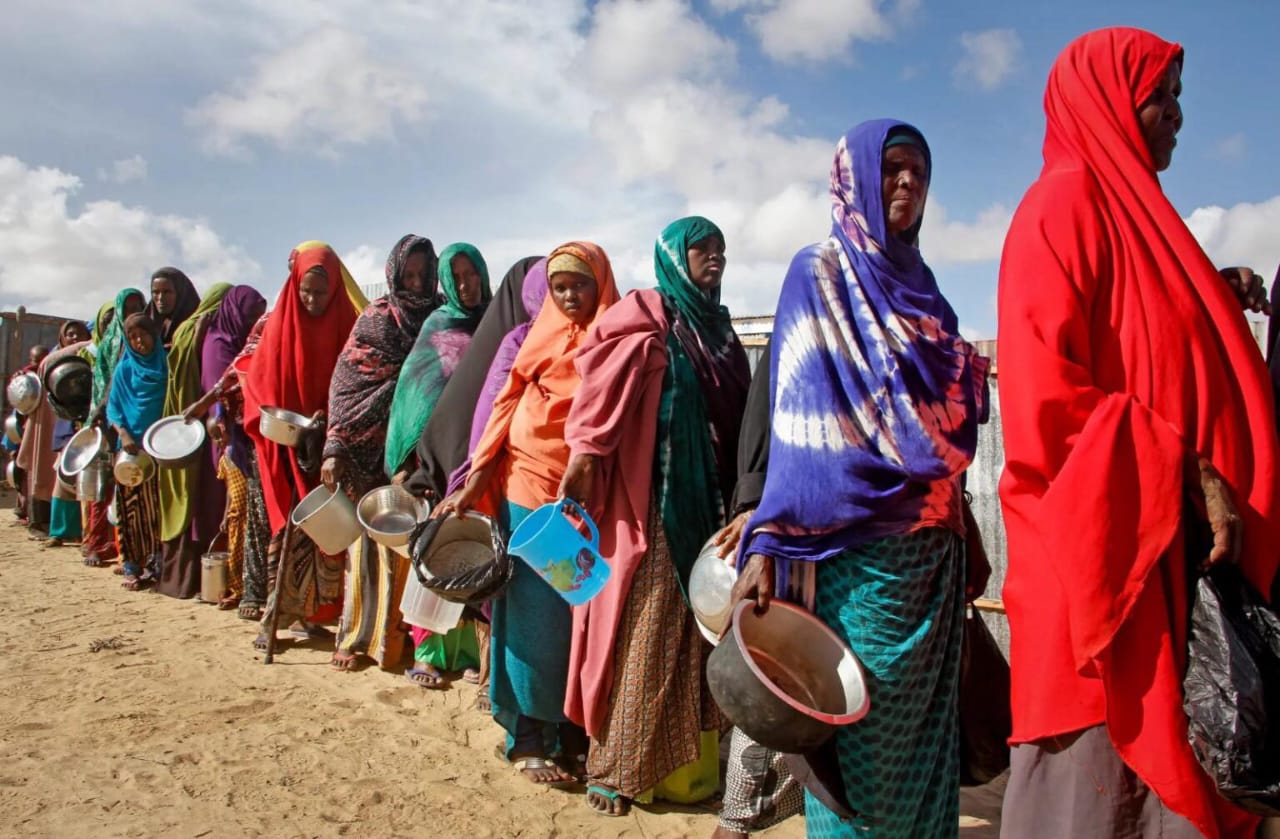
MOGADISHU, Somalia — For millions of Somalis, the struggle to find enough food has become a daily battle.
Across large parts of the country, families are facing worsening hunger as prolonged drought, conflict, displacement and rising living costs continue to erode their ability to survive. Humanitarian agencies warn that millions of people are at risk as food insecurity deepens in one of Africa’s most fragile nations.
Years of below-average rainfall have devastated crops and livestock, leaving many households without reliable sources of food or income. In rural communities, farmers have watched their fields dry up while pastoralists have lost animals that once sustained their families.
The crisis has been compounded by rising prices of fuel and essential goods, making food increasingly unaffordable for vulnerable households.
Aid agencies estimate that millions of people are facing acute hunger, while children remain among the hardest hit. Health organisations warn that large numbers of children under the age of five are suffering from acute malnutrition, placing them at heightened risk of illness and death.
The impact extends beyond nutrition.
In many communities, families have been forced to leave their homes in search of food, water and humanitarian assistance. Displacement has disrupted education, with some children dropping out of school as households migrate or struggle to meet basic needs.
Women and girls face additional risks during periods of displacement and instability, including exposure to violence, exploitation and limited access to healthcare services.
Somalia’s climate challenges have further complicated recovery efforts. While drought remains a major threat, periods of intense rainfall often trigger flooding, destroying homes, damaging infrastructure and spreading waterborne diseases.
Health authorities continue to battle outbreaks of cholera, measles and diphtheria in several parts of the country, placing additional pressure on an already strained healthcare system.
Mental health experts also warn that years of conflict, displacement and economic hardship have left many Somalis struggling with psychological trauma, even as access to mental health services remains limited.
Humanitarian organisations are responding through emergency food assistance, healthcare services, cash transfer programmes and nutrition support. Agencies including the World Food Programme, UNICEF, the World Health Organization and several local organisations are working to support vulnerable communities.
However, aid groups say funding shortages are threatening response efforts. Reductions in humanitarian financing have forced some organisations to scale back assistance at a time when needs continue to rise.
Security challenges also complicate aid delivery, particularly in areas affected by armed groups, where humanitarian workers face restrictions and security risks.
Analysts say Somalia’s hunger crisis reflects a combination of long-term structural challenges, including poverty, climate change, weak economic growth, conflict and inadequate investment in agricultural development.
While humanitarian support remains critical, experts argue that lasting solutions will require greater investment in climate resilience, food production, economic development and social protection systems.
For now, millions of Somalis remain caught between drought, displacement and hunger, hoping for relief in a crisis that shows little sign of easing.
This report is adapted from reporting by Open African Tribune and information from humanitarian agencies cited in the original report.


