
The finance committee of Senegal’s National Assembly is preparing to examine a revised budget that holds the key to securing a new support package from the International Monetary Fund.
Finance Minister Cheikh Diba made a formal request on Tuesday for lawmakers to reconsider the draft legislation. The proposal had previously been turned down by the ruling Pastef party, which commands a strong majority in the legislative body.
Any further delay in passing the legislation threatens to jeopardza the nation’s efforts to obtain an IMF bailout.
“Beyond budgetary concerns, the current situation also calls on us to show responsibility, discernment and a sense of perspective in our institutional relations,” said Diba in making the request.
Diba added that his appeal was intended to “seek a constructive outcome” and “avoid differences leading to a shutdown” that would ultimately harm the nation.
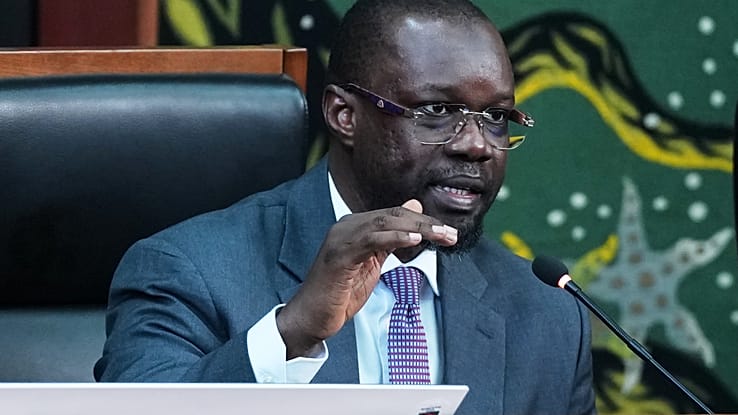
Pastef leader Ousmane Sonko, who also serves as the National Assembly speaker, accepted the request and stated he would coordinate the schedule for both committee hearings and the upcoming plenary session.
He told members of the National Assembly that it would “cast its vote with complete calm and complete clarity”.
Senegal is currently dealing with a heavy debt burden that, according to the IMF, ballooned to 132 per cent of gross domestic product by the end of 2024. The ballooning debt was uncovered following revelations of billions of dollars in undeclared loans incurred under the previous government.
On Monday, Senegal’s prime minister Ahmadou Al Aminou Mohamed urged the opposition not to paralyse the country by blocking the revised budget.
“You cannot bring a country to a standstill,” he said, urging Pastef to return to “dialogue” at a time of crisis for the country’s economy.
Authorities in Dakar are attempting to finalize a new 36-month, $2.2 billion debt deal with the IMF to help stabilize public finances.
This legislative standoff coincides with growing social unrest across the country, driven by high youth unemployment and an escalating cost-of-living crisis that sparked a three-day general strike last week.
