
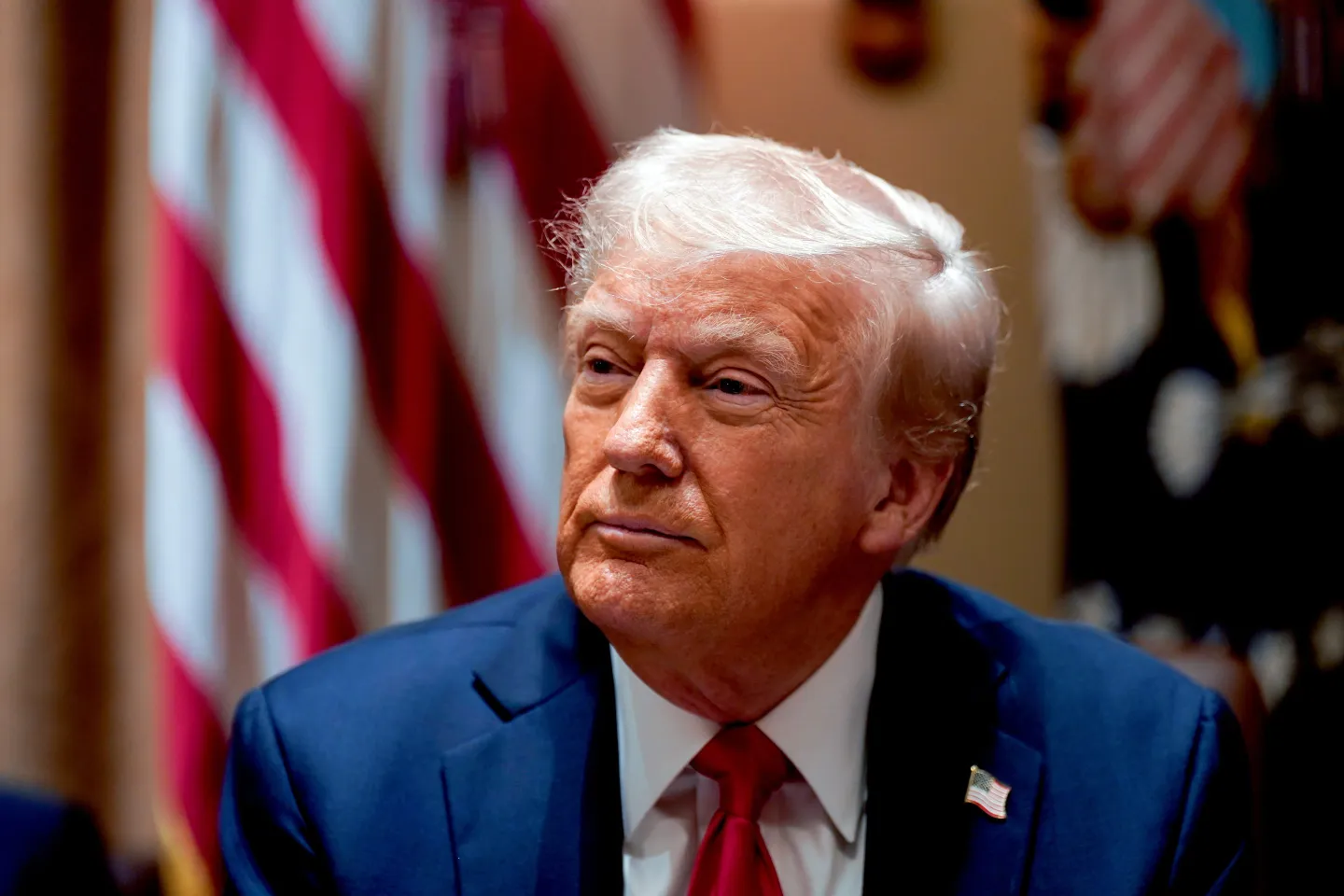
US President Donald Trump revealed on Tuesday that he had been on the verge of launching a major military assault on Iran before backing down at the request of Gulf Arab leaders, even as he warned that a full-scale attack remained authorised and could be executed at any moment if diplomatic efforts collapse.
Trump disclosed that the leaders of Qatar, Saudi Arabia, and the United Arab Emirates personally intervened to ask him to hold off, citing active negotiations now underway between Washington and Tehran.
He announced the development on his Truth Social platform, stating that he had instructed the US military to remain “prepared to go forward with a full, large scale assault of Iran, on a moment’s notice” should talks fail to produce an acceptable deal.
Speaking later at a White House event, Trump described the situation as a “very positive development,” saying Arab allies had indicated that a deal was within reach — one that would see Iran stripped of nuclear weapons. “If we can do that without bombing the hell out of them, I’d be very happy,” he said.
The escalation follows weeks of stalled diplomacy. Trump, who had indefinitely extended a nearly six-week ceasefire and made no secret of his desire to disengage from what has become a political liability, said he prepared the strike after Iran rejected his proposed framework for a deal.
Iran has maintained control over the Strait of Hormuz throughout the conflict, sending global oil prices sharply higher. Iranian foreign ministry spokesman Esmaeil Baqaei confirmed that exchanges with the United States were ongoing through mediator Pakistan, saying Tehran had made its concerns clearly known.
Iran’s conditions for a settlement include the release of frozen assets held abroad, the lifting of longstanding sanctions, and war reparations — demands US authorities have so far refused to meet.
Iranian President Masoud Pezeshkian, regarded as a moderate within a government increasingly dominated by the hardline Revolutionary Guards since the killing of Supreme Leader Ayatollah Khamenei in the February 28 strikes, sought to frame the negotiations as a matter of national dignity rather than capitulation.
“Speaking with Washington does not mean surrender,” he said.There were, however, signs of incremental progress. Iran’s Tasnim news agency, citing a source close to the Iranian negotiating team, reported that Washington had agreed in its latest proposal to waive oil sanctions while talks remain ongoing — a concession not previously offered.
