

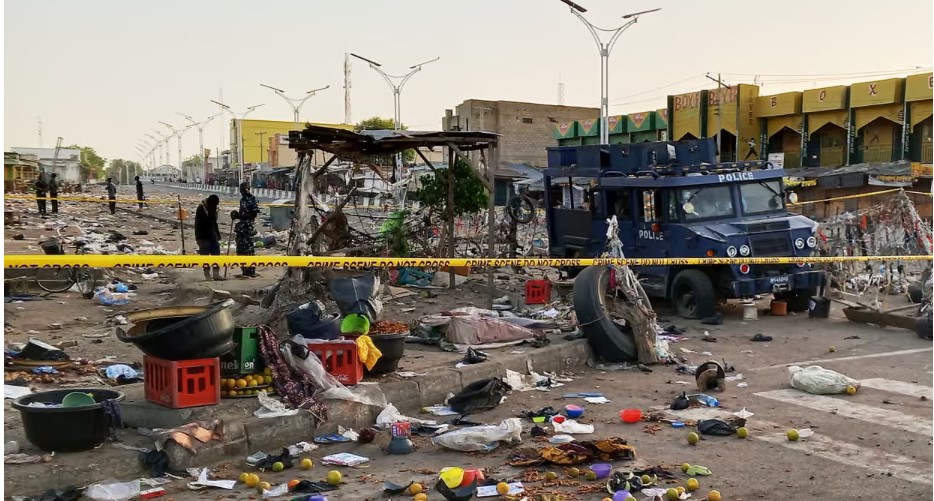
A recent report by the United Nations Office for the Coordination of Humanitarian Affairs reveals that 1,932 individuals lost their lives in Borno, Adamawa, and Yobe states between April and June 2026.
The 2026 Second Quarter Humanitarian Access Snapshot, compiled by the Humanitarian Access Working Group using data from the Armed Conflict Location and Event Data Project and the UN Mine Action Service, attributes these operational difficulties to ongoing violence, targeted assaults on aid workers, bureaucratic delays, and challenging environmental conditions.
Explosive ordnance incidents dropped by 10.5 percent from 67 in the second quarter of 2025 to 60 during the same period in 2026. Improvised explosive device events fell 16.9 percent from 65 to 54, while civilian casualties linked to these explosives saw a 66.9 percent decrease, falling from 163 to 54. This reduction was primarily driven by joint military actions involving the Armed Forces of Nigeria and United States forces in northern and central Borno, along with reduced movement by civilians due to heightened safety concerns.
The report noted: “The high-tempo nature of US and AFN military operations witnessed during this period contributed to a reduction in IED/EO incidents. Additionally, civilians aware of the heightened insecurity and threats by NSAGs moved around less during this period, contributing to a narrowing of the locations affected by IEDs this quarter.”
However, intense military activity provoked retaliatory attacks by non-state armed groups in several Borno local government areas, including Monguno, Damasak, Damboa, Bama, Konduga, Marte, Dikwa, Kukawa, Mobbar, and Gwoza, as well as Gujba in Yobe and Madagali in Adamawa. Consequently, health and nutrition partners halted activities in Dapchi, Bursari Local Government Area, on April 4. Similar violence forced temporary suspensions in Madagali and operational cutbacks in Chibok.
Nigerian troops successfully repelled assaults on Bazamri village on May 13 and near Alou Dam on May 31. The report recorded 11 military airstrikes in Borno during the quarter, with a major strike targeting Jilli Market on April 12, while other strikes focused on the Sambisa Forest and Mandara Mountains.
Direct attacks on aid workers and assets also rose. A relief truck was looted near Gubio on April 11, and two NGO workers were kidnapped in Monguno on June 24. On June 29, troops repelled an attack on an aid truck returning to Maiduguri from Damasak, though the driver suffered severe injuries when the vehicle triggered an IED near Kareto.
Environmental and administrative issues further disrupted aid delivery. A bridge collapsed in Rann on June 18 following heavy flooding predicted by the Nigerian Meteorological Agency.
Military restrictions requiring permits to transport fertilizer were enforced to prevent its use in explosive devices, which initially hampered local farming until the UN intervened to secure transport clearances.
Additionally, rising fuel prices stemming from the US-Israel conflict with Iran drove up delivery costs, while local authorities intercepted a relief truck on June 1 demanding extra paperwork before release.
