

Global economic growth is currently projected at 3.1 percent, while global inflation has climbed to 4.7 percent, according to the latest World Economic Outlook published Tuesday by the International Monetary Fund.
While a surge in artificial intelligence is bolstering technology-exporting economies, developing and climate-vulnerable regions are enduring a double setback from escalating energy expenses and severe weather events.
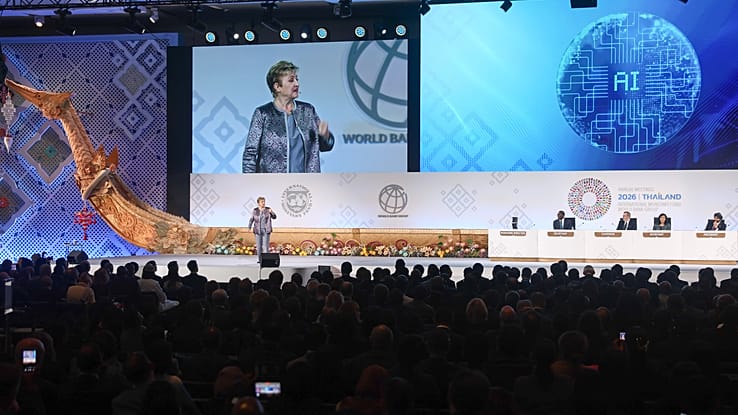
With over 60 percent of low-income countries experiencing or nearing debt distress, leaders at the World Bank and IMF Annual Meetings in Bangkok emphasized a clear two-part approach: execute fiscal consolidation to manage high debt and shield social safety nets, alongside aggressive investments in digital connectivity to participate in the broader tech-led economic rebound.
Wayne Henry, Chairman and Director General of the Planning Institute of Jamaica, highlighted the ongoing challenges facing developing nations:
“We are in a challenging environment as we are here because of geopolitical matters that that affect oil energy prices and that would affect all countries transportation fuel. And so they are strong inflationary impulses. And then we have, you know the climate, continent, climate vulnerabilities because of the intensities of events in terms of climate hazards. And a number of our developing countries in particular, are challenged and where we are vulnerable. And so I’m from the Caribbean region, and certainly we are the second most vulnerable”
“The head, though some of the positives we are hearing is the sort of AI boom, that technology boom. And a lot of those countries that are producers of technology and AI itself and, and members, you know, particularly in the supply chain of AI, we have seen optics in terms of revisions upward in terms of stronger growth, but certainly a number of our developing economies, and certainly in some of our regions we are not among them. We need to catch up in terms of to do more to to infuse greater, you know, digital connectivity to benefit in a greater way of technological advances.”
By combining strict debt management with strategic digital expansion, developing nations can protect vulnerable populations while ensuring a place in the evolving global economy.
