

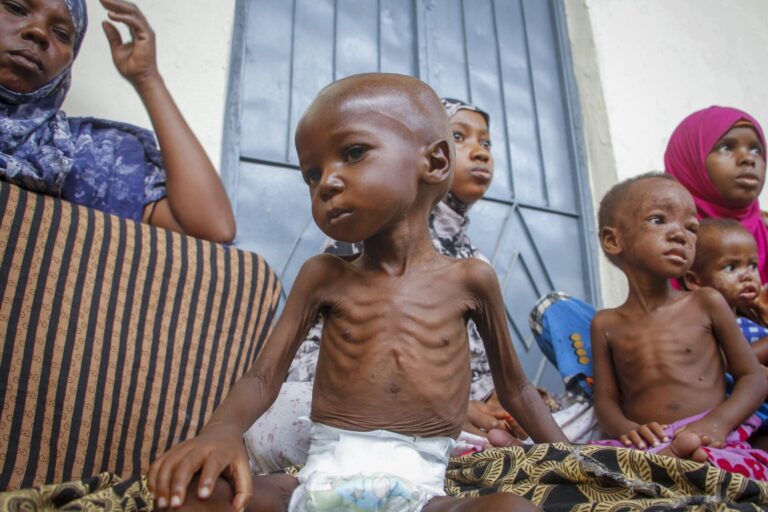
Life-threatening child malnutrition is rising rapidly across Somalia following the closure of more than 200 health and nutrition centers triggered by international aid cuts, according to United Nations warnings.
Data from UNICEF shows a 32 percent surge in children admitted with severe acute malnutrition and related complications during the first six months of 2026. Officials project that nearly 1.9 million children will face severe hunger throughout the year.
UNICEF spokesperson James Elder highlighted the impact of these financial rollbacks, stating that aid cuts in Somalia are closing doors to healthcare, shutting down nutrition services, and pushing water, education, and protection further out of reach. He warned that up to 618 medical facilities nationwide could shut down under worst-case funding projections, emphasizing that this is the wrong moment to retreat.
The decline in medical services coincides with an ongoing drought that has destroyed local agriculture, killed livestock, and wiped out livelihoods. Humanitarian agencies report that the severe dry spell displaced roughly 500,000 people between January and April, adding to the estimated 3.3 million Somalis already displaced. Around one-third of the country’s 19 million residents currently face severe food shortages.
Medical humanitarian group Doctors Without Borders noted that funding dedicated to acute malnutrition in specific areas dropped by over 80 percent this year. This follows severe funding cuts by Western donors, alongside Somalia’s exclusion from a major $2bn global humanitarian pledge by the United States due to allegations surrounding aid diversion and corruption.
These reductions have exacerbated the climate crisis, reducing clean water availability while clean water prices in rural regions have quadrupled. External economic factors, including rising fuel and fertilizer costs tied to the US-Israel conflict with Iran, along with predicted heavy flooding from an El Nino pattern, threaten to escalate the crisis further. The UN estimates that nearly a million young children, adolescent girls, and women risk losing access to essential nutrition care.
