

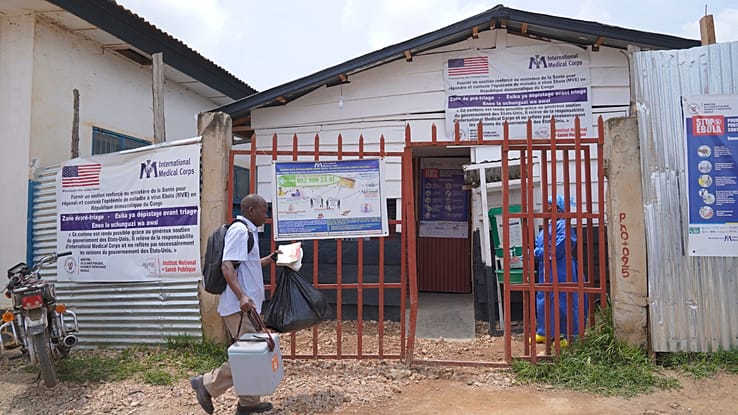
The ongoing Ebola crisis in the Democratic Republic of Congo has crossed a tragic threshold, claiming more than 2,000 lives in what has become the nation’s second-deadliest outbreak on record and one of the fastest-spreading ever recorded.
Data from Congolese health officials shows that the virus has resulted in 2,011 fatalities out of 4,381 confirmed cases since the outbreak was officially declared in May. Experts note that the pathogen was likely circulating undetected for several weeks before initial detection. The current surge is driven by the Bundibugyo strain of the Ebola virus, a variant for which no licensed vaccines or treatments currently exist.
Health Minister Samuel Roger Kamba indicated that the nation has not yet hit the peak of the outbreak, though officials are targeting a reduction in transmission rates over the coming three months.
Meanwhile, scientific investigations have offered new insights into how the virus emerged. A recent study concluded that the outbreak was almost certainly sparked by a fresh spillover event from wildlife to humans, rather than a resurgence or continuation of prior human outbreaks. Researchers discovered a previously unidentified variant of the Bundibugyo virus, highlighting an urgent need for enhanced monitoring of zoonotic diseases.
Response teams and healthcare staff on the ground continue to navigate severe obstacles, including regional violence, fragile medical infrastructure, and widespread public skepticism, as they work to contain the spread.
