


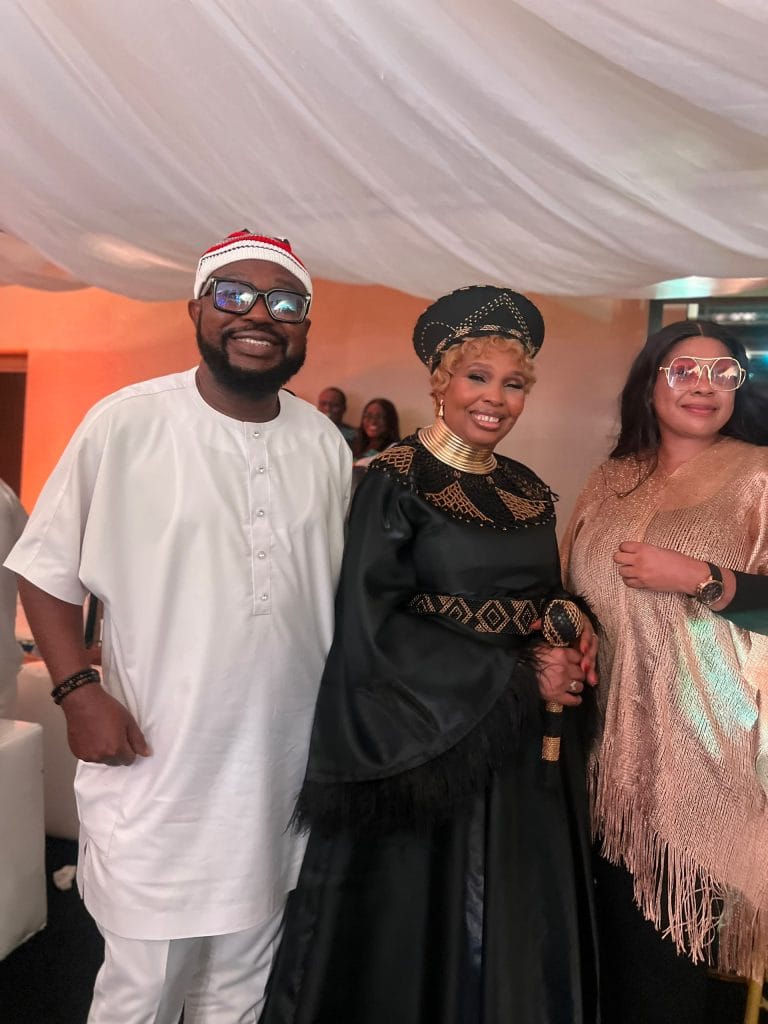
L-R: Convener of Geopolitics Series, Senator Iroegbu; Deputy High Commissioner of South Africa to Nigeria, Her Excellency Lindy Mminele; and the CEO of Ayanda Media Network, Ms. Ayanda Ngwane at the 2026 Heritage Day Celebration in Abuja
•Envoy recalls Nigeria’s role in ending apartheid, birthing South African democracy
•Says tourism, Nollywood, music, film remain bridges between Africa’s two major powers
South Africa has reaffirmed its commitment to unity with Nigeria, citing tourism, Nollywood, music, and film as the bridges that continue to bring the people of both countries closer together.
Deputy High Commissioner of South Africa to Nigeria, Amb. Lindy Mminele, said this on Wednesday at the 2026 Heritage Day celebration at the South African High Commission in Abuja. She told diplomats, government officials, tourism stakeholders and South Africans living in Nigeria that her country would continue to uphold the values of unity and Ubuntu, the African philosophy captured in the words “I am because you are.”
“Therefore, we choose unity. We choose Ubuntu. We choose the ties that bind us together,” she said.
This year’s celebration was held under the national theme, “Celebrating Our Living Heritage: Strengthening the Ties That Bind Us.
“Mminele said cultural cooperation between Nigeria and South Africa remained strong, particularly in film and music, noting that Nollywood productions were “very much loved in South Africa.”
According to her, both countries operate under a Memorandum of Understanding on cultural cooperation. Through it, South Africa participates in Nigeria’s Zuma International Film Festival, while Nigerian filmmakers participate in South African film festivals, including those in Durban. She described the relationship between cultural institutions in both countries as “tight and ongoing.”
She praised Nigeria’s cultural heritage, describing it as a vibrant mosaic of more than 250 ethnic groups. She said Nollywood films and Afrobeats music carried Nigerian stories to the world, while proverbs, folktales and cuisine preserved ancestral wisdom.
That exchange is already well established among young people in both countries. Afrobeats from Nigeria is a staple in South African clubs and on its airwaves. At the same time, South Africa’s Amapiano has become a fixture of Nigerian playlists, with artistes from both countries regularly collaborating on hit records.
On tourism, Mminele described South Africa as a premier destination offering a blend of natural beauty, wildlife, culture and adventure.
She cited Table Mountain in Cape Town, the Garden Route and Kruger National Park, home to the “Big Five”, as well as cultural heritage sites, vibrant cities, beaches and renowned wine regions.
She said visitors could also enjoy hiking, surfing, shark cage diving and safaris, adding that the country remained open to Nigerian travellers.
“So our offerings of Mpumalanga or any other province of South Africa for tourism are open for business,” she said.
She urged members of the diplomatic corps and their families to visit South Africa before their tours of duty in Nigeria ended, adding that South African Tourism looked forward to welcoming them “for an African experience like no other.”
She thanked South African Tourism for sponsoring the celebration every year, and acknowledged its representative, Mr Thekiso Rakolojoane, and his team. She also recognised Nigerian partners, including the Department of Culture and Tourism, the National Association of Nigerian Travel Agencies (NANTA), the Nigeria Association of Tour Operators (NATOP) and the Federation of Tourism Associations of Nigeria (FTAN). She described them as enablers of people-to-people cooperation between both countries.
Welcoming guests, “Ekhaya”, meaning home, Mminele described the High Commission as South Africa’s “home away from home” and thanked the Federal Government for hosting her country.
She recalled that the friendship between both nations was older than South African democracy itself.
“South Africa’s bilateral relations with Nigeria predate our democracy,” she said. “The role of Nigeria, the African continent and friends of South Africa internationally culminated in birthing the democratic South Africa that we represent today.”
Mminele recalled former President Nelson Mandela’s 2002 Heritage Day address, in which he described the day as one of the country’s most important for nation-building and for consolidating a national identity of “unity within diversity.”
She also quoted President Cyril Ramaphosa’s Heritage Day address last week, in which he said South Africans were celebrating “the languages we speak, the songs we sing, the food we prepare, the clothes we wear, the stories we tell and the customs we observe.”
Despite differences of culture, background and social standing, she said, South Africans remained one country, one nation and one people, united in diversity.
Her emphasis on unity and a shared African identity came at a sensitive moment.
Relations between both countries have been tested in recent months by a wave of xenophobic attacks on Nigerians and other African migrants in South Africa. Nigerian officials say at least 12 Nigerians have been killed this year, and about 1,640 have been evacuated since April. South Africa’s government has said it is firmly opposed to xenophobia, racism and discrimination.
Against that background, the envoy’s message was that the bonds between Africans run deeper than the forces that divide them.
“South Africa is not just a country in Africa but an African country,” she said, describing its past, present and future as woven into the fabric of the continent.
She said South Africa would continue to strengthen the ties that bring national unity among its people, the ties that bind it to the wider world, and above all the ties that bind it to Africa.
Mminele closed with former President Thabo Mbeki’s 1996 “I Am an African” speech, delivering her rendering of its lines to the gathering. “I am an African. I recognise myself in you. You recognise yourself in me,” she said.
Guests were served South African and Nigerian dishes, while Afrobeats and Amapiano filled the evening, as Nigerians and South Africans celebrated the culture, history and stories they share.


