

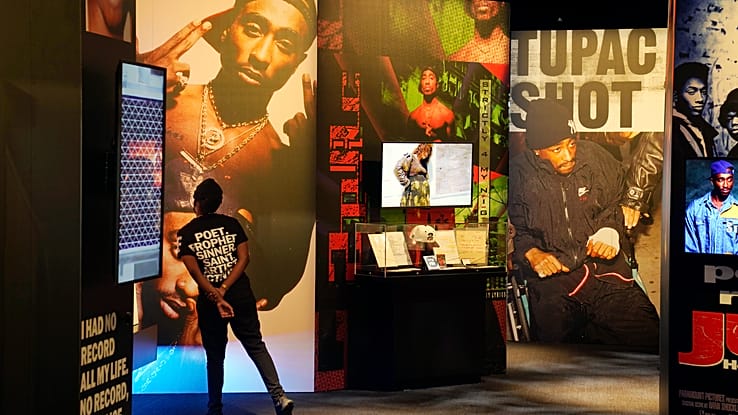
Former Los Angeles gang leader Duane “Keffe D” Davis has been convicted by a Las Vegas court for the 1996 murder of hip-hop star Tupac Shakur. Following brief deliberations, the jury found the 63-year-old guilty of first-degree murder with a deadly weapon, bringing a major legal development to one of the most prominent cold cases in American history.
The foreperson of the jury announced, “Count one, murder with use of a deadly weapon, guilty of first-degree murder with use of a deadly weapon.”
Facing a potential sentence of life in prison without parole, Davis addressed Judge Carli Kierny after the reading of the verdict to state his intention to appeal. Sentencing has been set for October 13.
Prosecutors argued that Davis, a former leader of the South Side Compton Crips, organized the September 7, 1996 drive-by shooting in retaliation after his nephew was involved in a fight with Shakur’s entourage at a Las Vegas casino. Shakur was in town for a heavyweight boxing match and was riding as a passenger in a BMW driven by Death Row Records co-founder Marion “Suge” Knight, who was also injured in the attack.
During closing arguments, prosecutor Binu Palal told the court, “Duane Davis, in the culture of gangs, could not let that stand. So what did he do? He acquired a firearm, got his group together, and went hunting for Mr Shakur.”
According to the state’s case, a white Cadillac pulled alongside Shakur’s vehicle at a red light, where Davis handed a firearm to a passenger in the rear seat and ordered the shooting. Shakur died six days later at the age of 25. Davis remains the sole living individual who was inside the Cadillac that night and the only person ever charged in connection with the killing.
The investigation had stalled for decades due to lack of evidence, but regained momentum following the 2019 publication of Davis’s memoir, “Compton Street Legend.” In the book, along with various media interviews and prior statements to law enforcement, Davis repeatedly described his role in the vehicle during the shooting, though he later pleaded not guilty and attempted to block these statements from trial.
Defense attorney Michael Sanft disputed the validity of those admissions, telling the jury, “You’re reading a book that is fiction and not fact. But the state wants you to believe that this is somehow a confession, that he was there and present at the time of the shooting.” Sanft maintained that no physical evidence tied Davis to the crime scene outside of his own past claims.
