

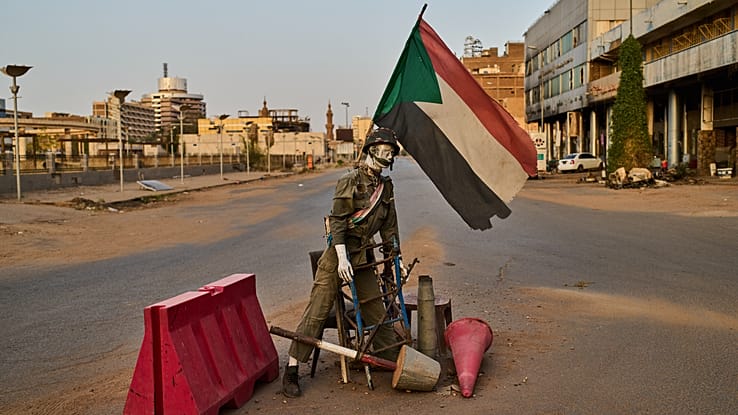
At least two million of the five million Sudanese residents who fled Khartoum have started making their way back home. Following a military victory over the Rapid Support Forces (RSF), a slow resurgence of daily life is beginning to emerge in the capital and several neighboring towns.
However, the center of Khartoum remains a harrowing landscape, resembling a ghost town, a minefield, and a mass grave. The city’s once-thriving markets, commercial high-rises, and affluent neighborhoods have been largely decimated.
Returning residents face severe infrastructure deficits, with persistent power outages and chronic water shortages becoming a daily reality.
Despite the widespread destruction, many returnees have expressed overwhelming emotion at seeing their city for the first time in years.
The reality on the ground, however, contrasts sharply with official pledges.
While authorities promised a rapid restoration of public services after defeating the RSF, electricity remains largely unavailable, buildings lie in ruins, and public sector workers are facing unpaid wages.
For some, the decision to return was a last resort, driven by necessity after fleeing a recent crackdown on refugees in neighboring Egypt.
The United Nations reports that fewer than 80,000 people have actually moved back into central Khartoum.
The physical scars of the conflict are visible across the downtown area, where intense, street-by-street battles took place.
The devastation marks two distinct waves of violence: the initial paramilitary sweep through the capital in April 2023, followed by a fierce counter-offensive last year when the Sudanese army and allied fighters fought to reclaim the territory.
