

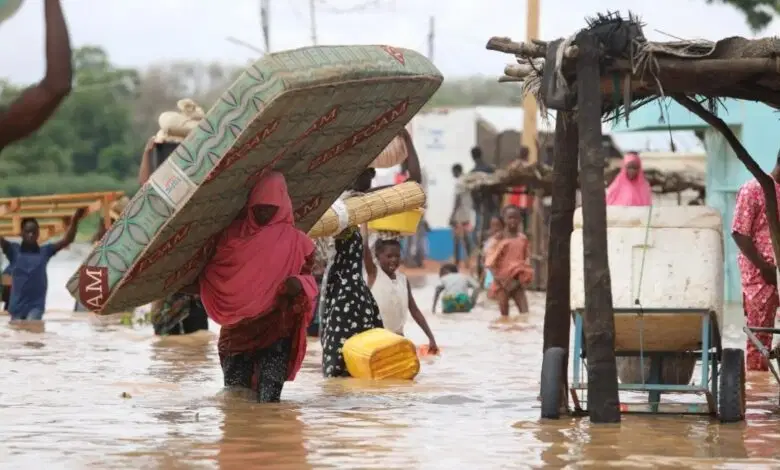
The governments of Kogi, Nasarawa and Niger states have intensified flood preparedness measures ahead of the peak of the 2026 rainy season, following forecasts identifying the states among areas at high risk of severe flooding.
The renewed efforts follow warnings from the National Flood Early Warning Centre, the Nigerian Meteorological Agency (NiMet) and the Nigeria Hydrological Services Agency (NIHSA) that the three states could experience significant flooding between July and September.
A survey by the News Agency of Nigeria (NAN) found the measures include construction of drainage infrastructure, activation of Emergency Operations Centres, public sensitisation campaigns, mapping of vulnerable communities and strengthened collaboration among emergency response agencies. Despite the improved preparedness, however, concerns remain over the utilisation of ecological funds.
In Kogi, Commissioner for Information and Communications Kingsley Fanwo said Governor Ahmed Ododo’s administration had adopted a proactive approach to disaster management. He said newly constructed drainage systems in Etahi, Omigbo and Olubojo communities in Ankpa Local Government Area had significantly cut flooding by channelling rainwater away from residential areas, and that the governor had approved increased budgetary allocations for disaster response.
Plans have also been concluded to establish Emergency Operations Centres across the state, with flood-prone communities being mapped for early intervention. Special Adviser on Emergency Management Muhammed Shaibu said the state had intensified early warning campaigns and inaugurated a seven-member committee to coordinate flood mitigation, while also leveraging the ACReSAL project to reclaim degraded land.
Shaibu noted Kogi’s location at the confluence of the Niger and Benue rivers makes it especially vulnerable, recalling that floods in October 2024 submerged more than 200 communities and displaced over two million people across nine local government areas, while 2022 floods affected more than 472,000 residents. He said difficult terrain hampered about 63 per cent of emergency response operations in the previous flood season, and urged residents of riverine communities — including Lokoja, Ibaji, Koton Karfe and Bassa — to heed early warnings and relocate when necessary.
