



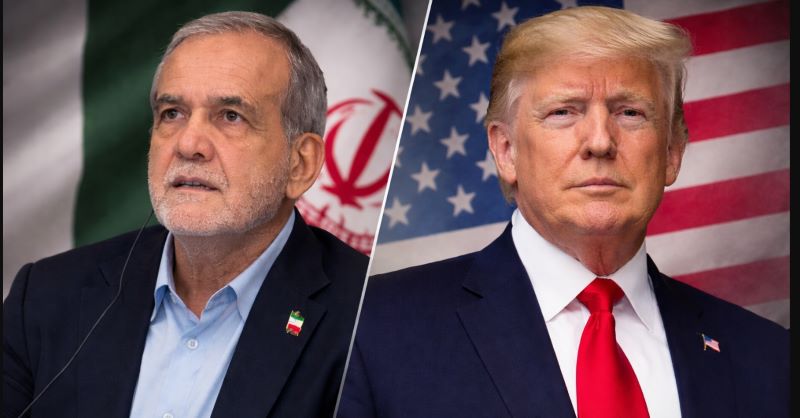
President Donald Trump announced on Wednesday that he has engaged in “very good talks” with Iranian leadership over the last 24 hours, suggesting that a deal to end the current conflict is “very possible.” The statement comes as Tehran reviews a formal peace proposal aimed at concluding the war that began on February 28.
While expressing optimism, the U.S. President maintained a firm stance regarding Iran’s nuclear capabilities and maritime restrictions.
Trump emphasized that any agreement must include the suspension of Iran’s nuclear program and the reopening of the Strait of Hormuz, a vital artery for global energy supplies.
“Look, this is very simple. Iran cannot have a nuclear weapon because as tough as they are, we want to keep them alive. We want to keep all of you alive,” Trump told White House reporters. He later told PBS that he hopes to secure the agreement before his upcoming trip to China, though he added a stern warning: “I think it’s got a very good chance of ending, and if it doesn’t end, we have to go back to bombing the hell out of them.”
In Tehran, the tone was notably more cautious. Foreign Ministry spokesman Esmaeil Baghaei characterized reports of an imminent deal as exaggerated, noting that while diplomatic messages are being exchanged via Pakistan, a formal response has not yet been issued.
Sources familiar with the mediation efforts suggest the current negotiations center on a one-page memorandum. This document would serve as the framework to end hostilities, subsequently triggering deeper discussions on lifting U.S. sanctions, unblocking the Strait of Hormuz, and establishing nuclear safeguards.
The path to peace remains obstructed by domestic skepticism in Iran. Ebrahim Rezaei, spokesperson for the Iranian Parliament’s Foreign Policy and National Security Committee, dismissed the current U.S. text on social media, labeling it “more of an American wish list than a reality.”
He further asserted, “The Americans will not gain anything in a war they are losing that they have not gained in face-to-face negotiations.”
Additionally, Iran’s semiofficial Tasnim news agency reported that the U.S. proposal still contains several “unacceptable provisions,” though the specific points of contention were not disclosed. As both nations review the terms, the international community remains on edge, watching to see if this latest diplomatic push can finally stabilize a region crippled by months of high-stakes conflict.


